ocd – a sign of prosperity

In a recent article on Huffington Post, the author details her own struggle with Obsessive Compulsive Disorder (OCD). OCD is “characterized by intrusive thoughts that produce uneasiness, apprehension, fear, or worry; by repetitive behaviors aimed at reducing the associated anxiety; or by a combination of such obsessions and compulsions.”

I am sure if I were tested, the diagnostic happy psychotherapists would say I have OCD. For example, I have spent hundreds or thousands of hours playing Arcanum, yet I have never finished the game. I keep restarting my character, trying to play the perfect game. Each time I find an annoyance in the game, I exit, delve into the game’s code, modify the game to my preference and then restart. This is not limited to Arcanum. I may have spent more time programming modifications for Fallout 3 and Fallout New Vegas than I have spent time playing either game.

There are very similar stories around the internet of “OCD”. From the Huffington Post comments section:

I worked for several years as a driver for a lady with OCD. She was quite incapable of driving herself, because if she ran over so much as a stick and could hear or feel it, she would not be able to stop herself from returning to the ‘scene’ to be sure that she had not injured or killed something. As she was not a hermit by nature, it was a grave problem for her to not be able to leave her house.

One familiar feature of all these stories is that they are first world problems. These “problems” can only be entertained because we live in a miraculously opulent world. When Jesus prayed “give us today our daily bread”, this was just not a figure of speech. People would literally grind their wheat daily to daily make their bread. There was no time in this world to color-organize closets, size-organize books, or reprogram computer games. People spent their day grinding wheat! Death by starvation is a good check on quirky behavior.

As Bryan Caplan notes, even mild incentives quickly change people’s diagnosable “diseases”. It is a wonderful world in which people have the time to complain about having to flick light switches multiple times.

Posted in Human Nature, Standard of Living | Leave a comment

how could both paul and james use abraham as an example

Both the apostle Paul and the leader of the church, James, use Abraham as examples when discussing salvation. This is interesting because Paul and James taught different gospels. This can be readily seen in how each author uses Abraham:

James:
Jas 2:20 But do you want to know, O foolish man, that faith without works is dead?
Jas 2:21 Was not Abraham our father justified by works when he offered Isaac his son on the altar?
Jas 2:22 Do you see that faith was working together with his works, and by works faith was made perfect?
Jas 2:23 And the Scripture was fulfilled which says, “ABRAHAM BELIEVED GOD, AND IT WAS ACCOUNTED TO HIM FOR RIGHTEOUSNESS.” And he was called the friend of God.
Jas 2:24 You see then that a man is justified by works, and not by faith only.

Paul:
Gal 3:5 Therefore He who supplies the Spirit to you and works miracles among you, does He do it by the works of the law, or by the hearing of faith?
Gal 3:6 just as Abraham “BELIEVED GOD, AND IT WAS ACCOUNTED TO HIM FOR RIGHTEOUSNESS.”
Gal 3:7 Therefore know that only those who are of faith are sons of Abraham.
Gal 3:8 And the Scripture, foreseeing that God would justify the Gentiles by faith, preached the gospel to Abraham beforehand, saying, “In you all the nations shall be blessed.”
Gal 3:9 So then those who are of faith are blessed with believing Abraham.
Gal 3:10 For as many as are of the works of the law are under the curse; for it is written, “CURSED IS EVERYONE WHO DOES NOT CONTINUE IN ALL THINGS WHICH ARE WRITTEN IN THE BOOK OF THE LAW, TO DO THEM.”
Gal 3:11 But that no one is justified by the law in the sight of God is evident, for “THE JUST SHALL LIVE BY FAITH.”

Those are both long quotes. To summarize:

James: Jas 2:24 You see then that a man is justified by works, and not by faith only.
Paul: Gal 2:16 knowing that a man is not justified by the works of the law but by faith in Jesus Christ,

Those who insist that Paul and James were preaching the same gospel create stories as to how both can be true at the same time. This can take multiple forms:

1. Works are the evidence of faith. Although works do not justify, they appear after justification.
2. Paul was talking about symbolic law. Paul believed that good works save (moral works), but Galatians is all about not performing the rituals that set Israel apart from the gentiles.
3. Works justify people to other people. Paul was talking about justification to God. James was talking about justification to men.

I have ranked these competing views by my subjective understanding of the popularity of each. Each view tries to reconcile how both authors can use Abraham while at the same time making very contrary statements. Although each view should be given due diligence, I believe all these views miss the mark.

The New Testament writers (and Jews in general) wrote in a fashion that marked trends in history. They used the Old Testament to show precedence. How those events were marked held remarkable latitude. I have written previously about Matthew’s loose usage of Old Testament texts.

Paul can likewise be seen using Old Testament examples very liberally:

Rom 9:25 As He says also in Hosea: “I WILL CALL THEM MY PEOPLE, WHO WERE NOT MY PEOPLE, AND HER BELOVED, WHO WAS NOT BELOVED.”

Here Paul is saying that God is accepting the gentiles. The gentiles were once not God’s people, but now they are. As a proof text he quotes Hosea 2:23. But the thing is that Hosea is not at all talking about the gentiles. The prophecy concerns a remnant of Israel which is faithful. Hosea 1 and 2 talks about how Israel will return to God in the future. Paul, here, makes the opposite point that the text makes. Paul says that God is grafting in gentiles!

But this type of proof texting was common at the time of Paul. The point in quoting the Old Testament was not to show predictions, but to show parallels. Sometimes the text had to be stretched a little.

In this way, both Paul and James can use Abraham as examples of justification. They both had different points, but there was enough precedence that they could make competing points.

The most striking thing is that both James and Paul, if taking about justification to salvation, are both using Abraham’s justification out of context. Abraham did not go to heaven or was not slated to enter the Kingdom of God. Abraham went to Abraham’s Bosom (paradise) when he died.

Posted in Bible, Dispensationalism, Theology | 7 Comments

a calvinist reads pride and prejudice

When Calvinists read the Bible they tend to pull specific verses out of context, ignore the context, and then assign random crazy concepts onto the words. They tend to allow their conceptions of God control the meaning of the text, instead of vice versa. In my latest video I preform a thought experiment to see how a Calvinist would read Pride and Prejudice if they did so in the same manner they read the Bible:

Posted in Calvinism, Theology, videos | 1 Comment

the intellectual bankruptcy of macroeconomics

In a recent post by Bob Murphy, he makes the elaborate point that the mainstream economists not only are arrogant and condescending towards those who do not share their beliefs, but they continue to be in spite of their own incredibly inaccurate predictions. When someone’s predictions are off mark, it should inject some humility and uncertainty into their vocabulary. But it never has for individuals such as Paul Krugman. Bob Murphy writes of the data:

Does everyone see the absolute deliciousness of this? The actual GDP growth in 2q2013 was higher with the sequester than the Macroeconomic Adviser report said it would be without sequester. It is thus the mirror image of the Romer/Bernstein projection of the stimulus package’s impact on unemployment.

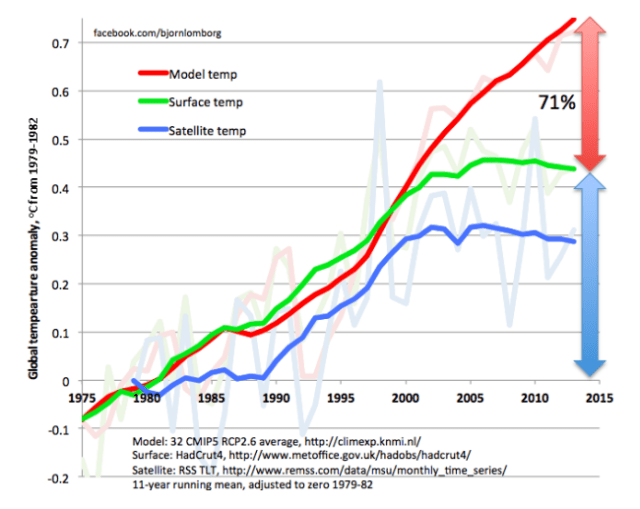
The exact opposite effects than what has been predicted have happened to the economy during both the sequester and the government shutdown. Those who believe government can spend to recovery, might want to take pause. Relatedly, global warming alarmists might also want to take pause:

Posted in Economics, Goverment, Science | Leave a comment

restaurant food pricing

Russ Roberts asks why take-out food at sit-down restaurants is not less expensive than the sit-down prices. The assumption is that the price of food at a restaurant covers the fixed cost of operating a table. Russ wonder why those who are not eating at a table still pay those prices. Why isn’t the take-out food cheaper?

The short answer is that it is cheaper. Professor Roberts (and I am surprised he didn’t think of it) forgets that take-out food avoids the customary tipping. In America, it is customary to tip waiters. The percent is ever increasing and now sits around 20%. When I was working as a waiter, the restaurant only paid me $3.50 per hour. If that was my only pay (or even a majority of my pay) I would have never stayed. Tips supplemented my pay. In other words, customers were paying part of the input costs of dine-in directly. And this wasn’t an insignificant amount. I averaged at least $13 per hour in tips (not bad for an 18 year old). Those who purchased take-out rarely tipped, and when they did the hostess was overjoyed. There was a mini-party at the hostess station.

Those who chose to rent a table either were faced with societal shaming or by a 10-20% tip. Small purchases seemed to have a tip price floor (if the person only ordered a cup of coffee you can assume they would at least leave a dollar) but there was not price ceiling. If the waiter did an exceptional job, the individual would be guilted into even exceeding the 20% threshold. It is a risky business, going out to eat.

One commenter on Russ’ blog notes that in Europe, where tipping is not as customary, that prices of take-out are actually lower.

Posted in Economics, Labor | Leave a comment

and God said

The Bible is filled with instances that present themselves as direct quotes from God. For example: Gen 6:7 “and the Lord said”. There are four possibilities of what this phrase could mean:

1. This is a direct quote from God. God said these literal words.
2. This is the author paraphrasing God (just as the authors of the four gospels paraphrase Jesus’ sermons). This would not be saying God did not say anything, just that this summarizes what God did say.
3. This is a literary devise by the author to express what God is feeling. If God was sad, the text would read “And God said, ‘I am sad’.”
4. The text does not mean in any way what it expresses and is in error. The Calvinists take this position when they say God saying he “repented” is just a way to placate uneducated readers.

For 1 and 2 (and even 3), the question should be “how did the author gain this information?” How did Moses know what to write in Genesis? Did God implant it into his mind? Did God sit him down and speak to him?

We see Moses conversing with God on Mount Sinai (Exo 19) and during the burning bush incident (Exo 3). We do not have evidence of Moses just hearing voices in his head or just “knowing” what is true. We would best assume that Genesis was dictated to Moses by God (just as the writing of the Ten Commandments). If the events in Genesis were passed on to Moses by man, this would cast doubt on the accuracy of the Bible (as for physical evidence that Genesis reflects truth, see carbon in diamonds and dinosaur soft tissue). We can extrapolate that the later prophets also experienced God in the same way (take Samuel for example).

If someone wants to be a Christian, the natural position on quotes by God is that they fall under either category 1 or 2. God is actually speaking.

Posted in Bible, Figures of Speech, Textual Criticism | Leave a comment

the hierarchy of understanding God

In the Bible there are three main ways that characteristics about God are communicated:

1. Statements God makes about himself
2. Statements the Bible makes about God
3. Statements that are quotes by third parties

The natural inclination should be to value those methods in that order.

When God describes Himself, we should take special note of what He is trying to communicate. When the Bible talks about God, it might be communicating a generality or a rule of thumb. When other people talk about God, they might be flat out wrong (such as Job’s friends). What should matter most is how God portrays Himself.

Calvinists demoted the first one to the last. God’s own speech about Himself is regulated to the lowest rung of understanding God. There is a systematic denial of God’s very utterances about Himself.

God says:

Gen 22:12 … for now I know that you fear God, since you have not withheld your son, your only son, from Me.

Gen 6:7 And the LORD said, I will destroy man whom I have created… for it repenteth me that I have made them.

Jer 15:6 … I am weary with repenting.

Gen 18:21 I will go down now, and see whether they have done altogether according to the cry of it, which is come unto me; and if not, I will know.

Jer 32:35 And they built the high places of Baal, which are in the valley of the son of Hinnom, to cause their sons and their daughters to pass through the fire unto Molech; which I commanded them not, neither came it into my mind, that they should do this abomination, to cause Judah to sin.

Isa 5:3 And now, O inhabitants of Jerusalem, and men of Judah, judge, I pray you, betwixt me and my vineyard.
Isa 5:4 What could have been done more to my vineyard, that I have not done in it? wherefore, when I looked that it should bring forth grapes, brought it forth wild grapes?

The Calvinist will try to explain away all of God’s utterances about Himself. God is pleading with mankind, hoping for change, hoping that they repent and turn to Him. God shows us His relational nature, His passion, and His deap love. But Calvinists would rather take vague verses, interpret them in light of abstract theology, and then overwrite what God says about Himself.

Final Note: the 4th way (and maybe the most important way) of understanding God is through Jesus

Posted in Bible, Calvinism, God, Open Theism, Theology | Leave a comment

drugs are not as addictive as you think

In daily interaction with people it is hard to tell if their behavior is by choice or by mental compulsion. Do I drink a lot of Coke (Coca-Cola) because my mind needs it or do I drink a lot of Coke because I love Coke and it is cheap? The same goes for drugs. Do drug addicts use drugs because they are addicted (their mind chemically craves the substance) or because that is just what they feel like doing?

Theodore Dalrymple argues, from his own observations of drug addicts, that addiction and withdrawal are mild even for heavy drug users. Now a new study shows that crack addicts respond well to incentives. Namely, most will take $20 at a distance future time over an immediate fix. Crack is not the magical substance portrayed by Hollywood:

When methamphetamine replaced crack as the great drug scourge in the United States, Dr. Hart brought meth addicts into his laboratory for similar experiments — and the results showed similarly rational decisions. He also found that when he raised the alternative reward to $20, every single addict, of meth and crack alike, chose the cash. They knew they wouldn’t receive it until the experiment ended weeks later, but they were still willing to pass up an immediate high.

The best part about this study, the author had the opposite expectations of what he found.

The practical takeaway is that we should not let people fool us by passing blame to “addictions”. The fact that they respond to incentives shows that they can choose otherwise. Every human action is a choice.

The theological take-away is that we are not robots (slaves of our physiology) and we have free will in our actions.

Posted in Economics, Human Nature, Open Theism, Science, Theology | Leave a comment

mencken on greek philosophy

From A Mencken Chrestomathy:

Is it seriously argued that Plato was the most enlightened Greek of his age? Then it may be argued with equal plausibility that Upton Sinclair has been the most enlightened American of this one. Item by item the two match: as political scientists, as professors of esthetics, as experts on the natural processes. In some ways, true enough, Plato was clearly superior to Sinclair: for one thing, he was better versed in the jargon of metaphysics, heavenly maid—which is to say, in the jargon of organized nonsense.

The plain facts are… that Greek philosophy was quite as idiotic as any other philosophy… They show that the salient Greek philosophers of Pericles’ were almost identical with the chutauqua orators of today, and that the more enlightened Greeks regarded them as public nuisances… If the history of Greek philosophy were known accurately, it would probably turn out to be no more than an imitation of some earlier philosophy, now forgotten and maybe abandoned by its inventors as nonsense.

HL Mencken understood that Greek philosophy was nonsense. Today, many Christians take up this mantle of nonsense for themselves, speaking exactly like the Greeks when explaining their worldview. We should take caution when adopting metaphysical concepts from the pagans.

Posted in Greek History, History, Theology | Leave a comment

on congressional pay

At work today one individual was complaining that Congress is still being paid during the government shutdown and also gets retirement benefits after only one term. Various complaints like this circle Facebook and new agencies from time to time. Here is Huffington Post. And here is a popular meme:

People just do not understand the fact that politicians are not in their job for the money. The average net wealth of members of Congress is over 5 million dollars. They really not care about their congressional salaries or retirements. What they care about is power, something much more dangerous.

What this should teach any observer is that humans have different value systems. Some people strongly favor power. Some people strongly value money. Some people value leisure. Those in congress could retire right now and life comfortably for the rest of their lives. But they instead choose to be in front of cameras, running the lives of millions of people whom they have never met.

Posted in Goverment, Human Nature | Leave a comment