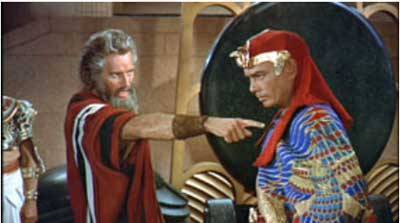
hardening pharaoh’s heart

Moses Exodus

In Exodus, often misunderstood is Pharaoh’s role in the story. To Calvinists, they see Pharaoh as a pawn without a will of his own. God hardens Pharaoh and uses him as a tool. To Free Will advocates, Pharaoh is the master of his own demise. God hardens, but only inadvertently. God really wants repentance from Pharaoh.

Both of these interpretations miss the overall narrative of Pharaoh. Pharaoh was stubborn and vain. God sees this grand opportunity and then decides to make an example out of Pharaoh. After all, God’s people are in bondage, Pharaoh is ripe for destruction, and Egypt is a powerful nation to destroy. Pharaoh is in the right place and time to make a lasting testament to God’s power. To make sure that this is an effective example, God cannot have Pharaoh cede too soon. God does not want Pharaoh to repent. But as Pharaoh repents, God still responds. There is no reason to believe that if Pharaoh had embraced his own repentance then Pharaoh would not have been spared. Although God had a vested interest in using Pharaoh, there was always room for repentance if Pharaoh wanted out.

Paul, in Romans, gives a summery of God’s purposes with Pharaoh:

Rom 9:17 For the Scripture says to the Pharaoh, “FOR THIS VERY PURPOSE I HAVE RAISED YOU UP, THAT I MAY SHOW MY POWER IN YOU, AND THAT MY NAME MAY BE DECLARED IN ALL THE EARTH.”
Rom 9:18 Therefore He has mercy on whom He wills, and whom He wills He hardens.

Rom 9:22 What if God, wanting to show His wrath and to make His power known, endured with much longsuffering the vessels of wrath prepared for destruction,

Paul was under the impression that not only did God want Pharaoh to be an example of punishment, God took active steps to ensure this happened. This is how Exodus reads.

Pharaoh is first introduced in Exodus 3:

Exo 3:19 But I am sure that the king of Egypt will not let you go, no, not even by a mighty hand.
Exo 3:20 So I will stretch out My hand and strike Egypt with all My wonders which I will do in its midst; and after that he will let you go.

God says He is “sure” Pharaoh will not let Israel go without being compelled. This does not sound like God is controlling Pharaoh at this point. This does sound like God is examining Pharaoh at that timeframe and then predicting what Pharaoh will do. Because God knows that Pharaoh will be stubborn, this presents God with a great opportunity.

God’s people are in bondage to a mighty nation. If God were to plague and destroy that nation while sparing and freeing His people, then no one could doubt it was anyone except Yahweh who performed those acts. This would be proof positive that God is the living God and that God is powerful. Even the mighty Egyptians and their pantheon of gods would fall before Yahweh.

God resolves on using Egypt to show His power. In order to do this effectively, God could not have Pharaoh relenting too soon. God tells Moses that He will harden Pharaoh’s heart to ward against Pharaoh repenting too soon. God ultimately wants to threaten Pharaoh’s child. That is the final test, the resolution which is not certain.

Exo 4:21 And the LORD said to Moses, “When you go back to Egypt, see that you do all those wonders before Pharaoh which I have put in your hand. But I will harden his heart, so that he will not let the people go.
Exo 4:22 Then you shall say to Pharaoh, ‘Thus says the LORD: “Israel is My son, My firstborn.
Exo 4:23 So I say to you, let My son go that he may serve Me. But if you refuse to let him go, indeed I will kill your son, your firstborn.” ‘ “

Moses reluctantly accepts God’s tasking to go to Pharaoh. Moses asks Pharaoh to let Israel go into the wilderness to sacrifice (a deception), but Pharaoh refuses. Instead, Pharaoh increases the workload of Israel and Israel turns against Moses. Moses goes to the Lord and asks why God has done this. God repeats His goal to Moses:

Exo 6:1 Then the LORD said to Moses, “Now you shall see what I will do to Pharaoh. For with a strong hand he will let them go, and with a strong hand he will drive them out of his land.”

God has not used power as of yet against Pharaoh. God was priming the pump. Pharaoh was being conditioned into enduring all sorts of power acts.

Again Moses is hesitant to go to Pharaoh, so again God repeats His plan:

Exo 7:3 And I will harden Pharaoh’s heart, and multiply My signs and My wonders in the land of Egypt.
Exo 7:4 But Pharaoh will not heed you, so that I may lay My hand on Egypt and bring My armies and My people, the children of Israel, out of the land of Egypt by great judgments.
Exo 7:5 And the Egyptians shall know that I am the LORD, when I stretch out My hand on Egypt and bring out the children of Israel from among them.”

God wants Pharaoh to reject Moses. God encourages Moses with this fact: “although it looks like you are not getting through to Pharaoh, that is My plan.” Without heavy handed power acts, Egypt (and all other nations) will not attribute Israel’s release to God.

In the next scene, it becomes apparent how God makes Pharaoh’s heart hard. God appeals to Pharaoh’s pride. Aaron casts down his staff. The staff turns to a snake. Pharaoh’s magicians cast down their staffs, and they too turn to snakes. Then Pharaoh’s heart is hardened:

Exo 7:13 And Pharaoh’s heart grew hard, and he did not heed them, as the LORD had said.

God had said He would harden Pharaoh’s heart. The text here shows how God did that. God uses a lesser power act, one that can be duplicated by Pharaoh’s magicians. Pharaoh sees Moses and Aaron then as charlatans and sees himself as superior. God is appealing to Pharaoh’s pride. This is how God hardens Pharaoh’s heart.

Moses and Aaron next turn the water of the Nile into blood, killing all fish. But Pharaoh’s magicians duplicate this as well. Because Pharaoh’s magicians can duplicate Aaron’s acts, this again leads to Pharaoh’s heart hardening:

Exo 7:22 Then the magicians of Egypt did so with their enchantments; and Pharaoh’s heart grew hard, and he did not heed them, as the LORD had said.
Exo 7:23 And Pharaoh turned and went into his house. Neither was his heart moved by this.

This again is God appealing to Pharaoh’s pride. God is priming Pharaoh to increase his pride slowly as to not trigger a sudden repentance. God seems to know which power acts Pharaoh’s magicians can duplicate.

God’s next act is sending a plague of frogs. The magicians also duplicate this, but Pharaoh seems to be breaking. Pharaoh concedes to let Israel go sacrifice in the wilderness for three days. Moses calls to God. God releases the curse. And then the frogs all die. God seemed willing to accept Pharaoh’s repentance if this was legitimate, but it is not. As soon as the plague is gone, Pharaoh hardens his own heart:

Exo 8:15 But when Pharaoh saw that there was relief, he hardened his heart and did not heed them, as the LORD had said.

This time the actor is explicitly said to be Pharaoh. Pharaoh’s pride is continually making Pharaoh harden his own heart, but that is God’s intent. God wants Pharaoh to harden his heart so that God can continue smiting Pharaoh.

God’s next power work is sending lice. This is the first act that the magicians cannot duplicate. The magicians, apparently showing their own cards, attribute this to God. The previous works might have been parlor tricks as their own works had been.

Exo 8:19 Then the magicians said to Pharaoh, “This is the finger of God.” But Pharaoh’s heart grew hard, and he did not heed them, just as the LORD had said.

Pharaoh does not like this information, and his heart grows hard. God has just defeated Pharaoh’s magicians. Before this time, there was a magnitude victory but not enough for Pharaoh’s mind to think that his own people couldn’t do those works. Now God hurts Pharaoh’s pride by doing something that Pharaoh cannot duplicate.

God sends flies, and Pharaoh quickly relents. Pharaoh promises to allow Israel to go sacrifice, but again once the plagues are gone then Pharaoh reneges on his promise. As soon as Pharaoh sees the plagues gone, his heart is hardened:

Exo 8:32 But Pharaoh hardened his heart at this time also; neither would he let the people go.

God then smites the livestock of Pharaoh. Once Pharaoh checks on the status of the Israelite livestock, this infuriates him. Again his heart is hardened:

Exo 9:7 Then Pharaoh sent, and indeed, not even one of the livestock of the Israelites was dead. But the heart of Pharaoh became hard, and he did not let the people go.

God then sends boils over all of Egypt. But Pharaoh’s heart is hardened by God.

Exo 9:12 But the LORD hardened the heart of Pharaoh; and he did not heed them, just as the LORD had spoken to Moses.

God follows up by striking Pharaoh with hail. This seems to break Pharaoh. Pharaoh gives a humbling repentance speech:

Exo 9:27 And Pharaoh sent and called for Moses and Aaron, and said to them, “I have sinned this time. The LORD is righteous, and my people and I are wicked.
Exo 9:28 Entreat the LORD, that there may be no more mighty thundering and hail, for it is enough. I will let you go, and you shall stay no longer.”

Moses correctly predicts that Pharaoh will quickly turn back once the plague is gone. Sure enough, Pharaoh sees that the plagues are gone and then his heart is hardened.

Exo 9:34 And when Pharaoh saw that the rain, the hail, and the thunder had ceased, he sinned yet more; and he hardened his heart, he and his servants.
Exo 9:35 So the heart of Pharaoh was hard; neither would he let the children of Israel go, as the LORD had spoken by Moses.

At this point God reiterates the purpose of this entire exercise:

Exo 10:1 Now the LORD said to Moses, “Go in to Pharaoh; for I have hardened his heart and the hearts of his servants, that I may show these signs of Mine before him,
Exo 10:2 and that you may tell in the hearing of your son and your son’s son the mighty things I have done in Egypt, and My signs which I have done among them, that you may know that I am the LORD.”

God wants Pharaoh to endure the plagues. God is very calculating in how He presents His plagues and in what way to best influence Pharaoh to continue enduring. But God is not convinced that Pharaoh has zero choice in the matter. God calls out Pharaoh for his unnatural hard heartedness:

Exo 10:3 So Moses and Aaron came in to Pharaoh and said to him, “Thus says the LORD God of the Hebrews: ‘How long will you refuse to humble yourself before Me? Let My people go, that they may serve Me.
Exo 10:4 Or else, if you refuse to let My people go, behold, tomorrow I will bring locusts into your territory.

At this point, even Pharaoh’s advisors turn against Pharaoh:

Exo 10:7 Then Pharaoh’s servants said to him, “How long shall this man be a snare to us? Let the men go, that they may serve the LORD their God. Do you not yet know that Egypt is destroyed?”

But Pharaoh is undeterred. Pharaoh threatens to kill Israel:

Exo 10:10 Then he said to them, “The LORD had better be with you when I let you and your little ones go! Beware, for evil is ahead of you.
Exo 10:11 Not so! Go now, you who are men, and serve the LORD, for that is what you desired.” And they were driven out from Pharaoh’s presence.

But Moses instead of attempting to lead Israel into certain death, sends another plague, one of locusts. This breaks Pharaoh into humility again:

Exo 10:16 Then Pharaoh called for Moses and Aaron in haste, and said, “I have sinned against the LORD your God and against you.
Exo 10:17 Now therefore, please forgive my sin only this once, and entreat the LORD your God, that He may take away from me this death only.”

Moses does as Pharaoh asks. God sends away the plague. But then God hardens Pharaoh’s heart. Pharaoh does not let the people go.

Exo 10:20 But the LORD hardened Pharaoh’s heart, and he did not let the children of Israel go.

God then blots out the sun. Darkness descends on Egypt. This prompts Pharaoh to again call Moses to him and then try to compromise sending Israel out. Pharaoh understands that as soon as Israel leaves, they will leave for good. Pharaoh sees through Moses’ deception, possibly from the first time Moses claimed it. Pharaoh asks that Israel leave their livestock, serving as collateral. Moses claims that they need all their livestock because they do not know which ones will be needed for a sacrifice (another deception).

It is right after this that the text said the Lord hardened Pharaoh’s heart again. Pharaoh did not like Moses dictating the terms and quickly turns against Moses.

Exo 10:27 But the LORD hardened Pharaoh’s heart, and he would not let them go.

Pharaoh tells Moses that the next time he sees Moses then he will kill Moses. Pharaoh is at his breaking limit. The humiliation has built up and Pharaoh is mentally erratic. But Moses offers one last plague before he leaves Pharaoh. Moses warns that all the firstborn of Egypt will die. After this Moses leaves Pharaoh “in anger”. Pharaoh is now being personally threatened. God hardens Pharaoh’s heart:

Exo 11:9 But the LORD said to Moses, “Pharaoh will not heed you, so that My wonders may be multiplied in the land of Egypt.”
Exo 11:10 So Moses and Aaron did all these wonders before Pharaoh; and the LORD hardened Pharaoh’s heart, and he did not let the children of Israel go out of his land.

This final plague turns the people against Pharaoh. They advise to send Israel away before they all die. Pharaoh calls Moses in the middle of the night to send them away:

Exo 12:31 Then he called for Moses and Aaron by night, and said, “Rise, go out from among my people, both you and the children of Israel. And go, serve the LORD as you have said.
Exo 12:32 Also take your flocks and your herds, as you have said, and be gone; and bless me also.”

Pharaoh is humbled and concludes this by asking for a blessing.

One last time God hardens Pharaoh’s heart. This time God’s goal is to destroy Pharaoh’s army. Pharaoh learns that Israel’s request to sacrifice to God for three days had been just a ruse. Pharaoh becomes infuriated and sends an army after Moses:

Exo 14:4 Then I will harden Pharaoh’s heart, so that he will pursue them; and I will gain honor over Pharaoh and over all his army, that the Egyptians may know that I am the LORD.” And they did so.
Exo 14:5 Now it was told the king of Egypt that the people had fled, and the heart of Pharaoh and his servants was turned against the people; and they said, “Why have we done this, that we have let Israel go from serving us?”

Exo 14:8 And the LORD hardened the heart of Pharaoh king of Egypt, and he pursued the children of Israel; and the children of Israel went out with boldness.

God then sets a trap for the Egyptians. The Egyptians will follow Israel into the path through the sea that God creates. But God will swallow the entire Egyptian army in the waves. To ensure they pursue, God is said to harden the hearts of the Egyptians:

Exo 14:17 And I indeed will harden the hearts of the Egyptians, and they shall follow them. So I will gain honor over Pharaoh and over all his army, his chariots, and his horsemen.

This all has the intended results that God wanted:

Exo 14:31 Thus Israel saw the great work which the LORD had done in Egypt; so the people feared the LORD, and believed the LORD and His servant Moses.

When God hardens hearts, it seems to be through mechanisms that naturally appeal to people’s pride. Pharaoh is humiliated. The Egyptian army is given the sight of an easy victory. God does not seem to be using magical heart hardening substance, but tactics in manipulation.

Hardening the heart happens to those predisposed to that temperament. God is reinforcing the actor’s current mentality, and not against their will. God even sometimes uses a measure of deception to effect the hardening of hearts. God tells Pharaoh that Israel will be coming back, but then shows Pharaoh the truth to enrage him. Each statement is meant to manipulate and control.

The entire text lends itself to God being a master chess player. There is a pretty clear cat and mouse game being described between God and Pharaoh. God wants certain results from Pharaoh and uses all sorts of plans to make Pharaoh act as God wants. The multilayered plan includes Moses, Pharaoh’s pride, the advisers, political pressure, humiliation and mental exhaustion.

The narrative is straightforward, Pharaoh was stubborn and vain. God sees this and then decides to make an example out of Pharaoh. To make sure that this is an effective example, God cannot have Pharaoh cede too soon. God uses His power to persuade Pharaoh to not relent before the plan is complete. But God is open to pardon: as Pharaoh repents, God still responds. Although God had a vested interest in using Pharaoh, there was always room for repentance if Pharaoh wanted out. But Pharaoh was headstrong, and it led to his destruction and the fulfillment of God’s plan.

Posted in Bible, God, Omnipotence, Open Theism, Theology | 1 Comment

misquoted verses – God’s ways are higher than ours

Isa 55:9 “For as the heavens are higher than the earth, So are My ways higher than your ways, And My thoughts than your thoughts.

This verse is used as a catch-all verse to dismiss arguments. If anything is said of God that a Christian finds offensive and does not want to believe, then this verse is used to dismiss the idea without examination. But this verse is not used in Isaiah in some sort of blanket distancing God from human kind. Instead, this verse specifically means that God shows mercy to the repentant rather than exact vengeance. This is not some sort of absolute distinction meaning no person could conceivably act like God, but instead, it means that humans tend to be vengeful whereas God shows mercy even in extreme cases.

Examining the context:

Isa 55:3 Incline your ear, and come to Me. Hear, and your soul shall live; And I will make an everlasting covenant with you— The sure mercies of David.
Isa 55:4 Indeed I have given him as a witness to the people, A leader and commander for the people.
Isa 55:5 Surely you shall call a nation you do not know, And nations who do not know you shall run to you, Because of the LORD your God, And the Holy One of Israel; For He has glorified you.”
Isa 55:6 Seek the LORD while He may be found, Call upon Him while He is near.

The first set of verses in this chapter are dedicated to wooing Israel. God calls Israel to repentance. If they repent, God will make a covenant with them. They will be a strong nation whom can command other nations to action. God will be their God and they will be God’s people.

But as of now, there is a problem. The people are wicked, so wicked that they risk being punished in spite of any repentance. It is this that God tries to dispel:

Isa 55:7 Let the wicked forsake his way, And the unrighteous man his thoughts; Let him return to the LORD, And He will have mercy on him; And to our God, For He will abundantly pardon.
Isa 55:8 “For My thoughts are not your thoughts, Nor are your ways My ways,” says the LORD.
Isa 55:9 “For as the heavens are higher than the earth, So are My ways higher than your ways, And My thoughts than your thoughts.

God wants the wicked to repent. It is them to whom God says “My thoughts are not your thoughts.” It is that person whom God will pardon, because “God’s ways are not his ways.” Normal people, especially the wicked audience of this chapter, would not pardon as God does. But God promises blessings for the wicked if they repent.

God then proceeds to detail His promise of blessings:

Isa 55:10 “For as the rain comes down, and the snow from heaven, And do not return there, But water the earth, And make it bring forth and bud, That it may give seed to the sower And bread to the eater,
Isa 55:11 So shall My word be that goes forth from My mouth; It shall not return to Me void, But it shall accomplish what I please, And it shall prosper in the thing for which I sent it.

God is not lying when He promises blessings to the repentant. Just as the rain creates green grass rather than just returning to the sky, God will create prosperity without His work returning fruitless. This is the context of God’s word not returning to Him void.

God then paints a picture of the paradise He is promising:

Isa 55:12 “For you shall go out with joy, And be led out with peace; The mountains and the hills Shall break forth into singing before you, And all the trees of the field shall clap their hands.
Isa 55:13 Instead of the thorn shall come up the cypress tree, And instead of the brier shall come up the myrtle tree; And it shall be to the LORD for a name, For an everlasting sign that shall not be cut off.”

Posted in Bible, God, Misquoted Verses, Omnipotence, Theology | Leave a comment

God Who Sees

One very strong reoccurring theme in the Bible is that God knows what men do. In Ezekiel 8, there occurs a very telling illustration of man’s denial of this and God’s hatred of this belief. Ezekiel is called by God. God brings him to a wall, from which Ezekiel digs out a door. This might have been a secret passage or divinely created door. Ezekiel enters and sees seventy elders of Israel surrounded by idols. The great men of Israel are worshiping false gods, and they do so explicitly because they do not believe God will know what they do in secret rooms:

Eze 8:6 Furthermore He said to me, “Son of man, do you see what they are doing, the great abominations that the house of Israel commits here, to make Me go far away from My sanctuary? Now turn again, you will see greater abominations.”
Eze 8:7 So He brought me to the door of the court; and when I looked, there was a hole in the wall.
Eze 8:8 Then He said to me, “Son of man, dig into the wall”; and when I dug into the wall, there was a door.
Eze 8:9 And He said to me, “Go in, and see the wicked abominations which they are doing there.”
Eze 8:10 So I went in and saw, and there—every sort of creeping thing, abominable beasts, and all the idols of the house of Israel, portrayed all around on the walls.
Eze 8:11 And there stood before them seventy men of the elders of the house of Israel, and in their midst stood Jaazaniah the son of Shaphan. Each man had a censer in his hand, and a thick cloud of incense went up.
Eze 8:12 Then He said to me, “Son of man, have you seen what the elders of the house of Israel do in the dark, every man in the room of his idols? For they say, ‘The LORD does not see us, the LORD has forsaken the land.’ “

Claims like this were very common in ancient Israel. The theology of Israel had no familiarity with themes such as omnipresence or omniscience. They were not taught and did not believe that God always saw “everything”, “everywhere”. The judges and prophets did not teach these concepts. Instead, the counter-claim by the prophets is always: God can see and you will be punished. The counter-claim is not a description of omnipresence or omniscience, but an assurance that God knows what people do.

In the very next chapter, God’s anger is again kindled against this belief of ignorance:

Eze 9:9 Then He said to me, “The iniquity of the house of Israel and Judah is exceedingly great, and the land is full of bloodshed, and the city full of perversity; for they say, ‘The LORD has forsaken the land, and the LORD does not see!’

When people believe God will not know what they do, then people become wicked. This belief was common enough in Israel that God singles it out for condemnation. In modern America, people do not sin because “God will not see it”. Americans have been raised in a culture where “if God exists, God is omniscient and omnipresent.” There is no strong evidence to conclude that these were theological options in Israel.

We see the same counter testimony against God throughout the Bible:

Psa 10:11 He has said in his heart, “God has forgotten; He hides His face; He will never see.”
Psa 10:12 Arise, O LORD! O God, lift up Your hand! Do not forget the humble.
Psa 10:13 Why do the wicked renounce God? He has said in his heart, “You will not require an account.”

In Psalms 10, the author asks God where God is. The author wants God to act. To stir God into action, the author presents the claims of God’s detractors. They say “God doesn’t see what we do”, “God will not act”, and “God will not punish us.” The author is using these words against God to get God to act, and prove these statements wrong. The author seeks to overturn the sentiments with clear divine acts.

Psa 59:7 Indeed, they belch with their mouth; Swords are in their lips; For they say, “Who hears?”

In Psalms 59:7, David represents the evil people as sinning with their lips. Their claim is that God does not hear them. God will not know that they said these evil things. David is confident that God will destroy them for these words. David asks God to destroy them slowly to reinforce to others how wrong they are.

Psa 64:5 They encourage themselves in an evil matter; They talk of laying snares secretly; They say, “Who will see them?”

In Psalms 64, David again tackles these enemies of God. This time David’s enemies are building secret traps against David. David is assured that God sees these schemes and will foil these schemes.

Psa 73:11 And they say, “How does God know? And is there knowledge in the Most High?”

In Psalms 73, Asaph wonders why the wicked prosper. The wicked increase in riches through evil, claiming God does not see their acts. Asaph’s hope is in God, that God will lead these people to their demise.

Psa 94:7 Yet they say, “The LORD does not see, Nor does the God of Jacob understand.”
Psa 94:8 Understand, you senseless among the people; And you fools, when will you be wise?
Psa 94:9 He who planted the ear, shall He not hear? He who formed the eye, shall He not see?

In Psalms 94, the author confronts the wicked people who claim that God cannot see their works. His response is that God does in fact see their works. Not only does God see, but God will destroy them for evil.

In the Bible, God is the God who sees:

Gen 16:13 Then she called the name of the LORD who spoke to her, You-Are- the-God-Who-Sees; for she said, “Have I also here seen Him who sees me?”

In Genesis 16, Sarah is in pain because she is barren. God hears her prayers and then gives her a child. Because God saw her desires and fulfilled them, Sarah calls Yahweh the God-Who-Sees. God watches prayers.

Pro 15:3 The eyes of the LORD are in every place, Keeping watch on the evil and the good.

In Proverbs, all people are said to be watched by God. Although “Eyes of the Lord” are sometimes used to mean angels, angels could very well be the mechanism by which God sees every one’s actions. The idea of Proverbs 15:3 is that when people do good or evil, God will know and reward appropriately.

Psa 14:2 The LORD looks down from heaven upon the children of men, To see if there are any who understand, who seek God.

In Psalms 14, David relates God as searching the Earth from heaven to find righteous men. God is actively watching the actions of men and evaluating them.

Psa 33:13 The LORD looks from heaven; He sees all the sons of men.
Psa 33:14 From the place of His dwelling He looks On all the inhabitants of the earth;
Psa 33:15 He fashions their hearts individually; He considers all their works.

In Psalms 33, the idea is repeated. God is in heaven looking over the Earth. God sees individuals and how they act. God individually judges those people.

Jer 16:17 For My eyes are on all their ways; they are not hidden from My face, nor is their iniquity hidden from My eyes.

In Jeremiah 16, God makes the simple claim that He sees the actions of the wicked. This is in context of predicting a coming judgment.

Jer 23:24 Can anyone hide himself in secret places, So I shall not see him?” says the LORD; “Do I not fill heaven and earth?” says the LORD.

In Jeremiah 23, God makes the claim that people cannot hide. Although many of the people were under the impression they could hide in secret rooms, God says that there is no secret place where they cannot be seen.

“Do I not fill heaven and earth” should not be taken as some sort of claim for omnipresence. This would be an unprecedented claim. Rather, it is more probably a figure of speech. The idea would be that God fills heaven and earth in that He can see anywhere. Alternatively, God is saying that He created all living things on Earth. Can He not then see what they are doing?

Heb 4:13 And there is no creature hidden from His sight, but all things are naked and open to the eyes of Him to whom we must give account.

In Hebrews 4, God is said to see all creatures. The creatures will then account to God. It is probable but not necessary that the author was including normal animals in the blanket “creature” category.

The theme that God can see everyone’s actions, including the secret actions of men, is a constant and reoccurring theme in the Bible. This concept is subtly embedded in countless texts. It is not the idea that God knows what people will do in the future (although God predicts quite a few behaviors in the Bible), but that God knows what people are doing or have done. People will not get away with sin.

God “looks” from heaven. God’s “eyes” watch people. There is no presumption of innate knowledge. A Biblical theology is one in which one of God’s important attributes is being the God-Who-Sees. Claiming God cannot see is akin the atheism and punished by God in the Bible.

Isa 29:15 Ah, you who hide deep from the LORD your counsel, whose deeds are in the dark, and who say, “Who sees us? Who knows us?”

Posted in Bible, God, Omniscience, Theology | 2 Comments

On the petty, unscientific character of Galileo

A Guest Post By Jon Fisher

David Bentley Hart’s book Atheist Delusions: The Christian Revolution and Its Fashionable Enemies is a strong polemic against much of the misinformation surrounding Christian theology and history. Beginning with a short dismissal of the New Atheist (TNA) movement associated mainly with Dawkins, Dennett, Harris and Hitchens, he turns toward a broader thesis that both our modern understanding of charity and of knowledge could not have been possible in the West without the revolutionary philosophical and social ideals brought about by Christianity. Hart is not a historian by profession, a fact he makes obsequiously clear in his introduction. However, his work does serve to dispel a number of prominent myths about Christianity commonly spread in our culture.

In particular, while most moderns laud Galileo as a hero, valiantly defying a dogmatic church for the sake of advancing scientific truth, Hart describes Galileo as petulant, irascible, and–most importantly–unscientific: unscientific towards his peers such as Kepler and Brahe and unscientific in his promotion of the Copernican model. Hart points out that the Copernican model itself had been appreciated for decades among major figures of the Catholic hierarchy without causing “great scandal” in the church. The incident of Galileo’s censure rather came about as a result of a clash of egoism between Galileo and Pope Urban VIII. As Hart writes:

Galileo, it must be said, squandered good will with remarkable abandon. He was, not to put too fine a point on it, selfish, irascible, supercilious, and mildly vindictive. He could not abide rivals, resented the discoveries of others, refused to share credit with astronomers who had made observations of the same celestial phenomena as he had, and belittled those whose theories differed from his own (his attitude toward Kepler, for instance, was frightful). Incensed that the Jesuit astronomer Horatio Grassi had presumed, in 1618, to describe the movement of comets beyond the lunar sphere without mentioning Galileo—who had, as it happens, done absolutely nothing to merit such mention—Galileo chose to deny that such comets were anything but optical illusions, and for good measure even attacked Tychos observations of comets. He provoked public controversy where none was necessary, once on the rumor that his theories had been deprecated in the course of someone else’s private dinner conversation. And his uncompromising demand for an absolute vindication of his theories precipitated the ecclesial consultation of 1616 that—when it turned out that Galileo was unable to provide a single convincing proof of Copernicanism—resulted in an injunction (of great gentleness, actually) admonishing Galileo against teaching the Copernican system. As for Galileo’s decisive trial in 1633, it was, as Arthur Koestler has noted,“not in the nature of a fatal collision between opposite philosophies of existence . . . but rather a clash of individual temperaments aggravated by unlucky coincidences.” Urban VIII himself had encouraged Galileo to write his Dialogue concerning the Two Chief World Systems, the Ptolemaic and Copernican (1632), enjoining only that it include a statement to the effect that Copernican theory was just a hypothesis and that no scientist could pretend to know perfectly how God had disposed the worlds. Galileo did include such a statement in the dialogue, at its conclusion in fact, but decided to place it on the lips of a ponderously obtuse character whom he tellingly named Simplicio, a doctrinaire Aristotelian placed in the dialogue so as to provide a foil for the wise Copernican Salviati and a comical contrast to Sagredo, the clever scientific novice; and, to heap one insult upon another, Simplicio attributes the formula to an “eminent and erudite personage, before whom one must needs fall silent.” This was, to all appearances, an unwarranted and tasteless affront to a cultured and generous friend, and Urban—an Italian gentleman of his age, a prince of the church, and a man of enormous personal pride—took umbrage.

More importantly, though, and too often forgotten, Urban was entirely right on one very crucial issue: the Copernican model was in fact only a hypothesis, and a defective one at that, and Galileo did not have either sufficient evidence to support it or a mathematical model that worked particularly well. Though Galileo was far and away the greatest physicist of his age (and indeed of human history to that point), he was not an astronomer in the fullest sense—he was more a brilliant stargazer—and seems to have been little interested in the laborious observations and recondite calculations of those who were. Hence, he seems not to have cared how impossibly complicated and unconvincing Copernicus’s model of the heavens was. It is not even certain that by 1632 he clearly recalled how the Copernican system worked. He did not avail himself (though he was perfectly and resentfully aware) of Kepler’s elliptical planetary orbits, which were encumbered by none of the inconsistencies and internal corrections and physical impossibilities of the Ptolemaic and Copernican systems. Instead, he insisted along with Copernicus upon the circular movement of the planets, with all the mathematical convolutions this entailed. He had no better explanation than Copernicus for the absence of any observable stellar parallax, even when the stars were viewed through a telescope. And his most cherished proof of terrestrial rotation—the motion of the tides—was manifestly ludicrous and entirely inconsistent with the observable tidal sequences (he dismissed Kepler’s entirely correct lunar explanation of the tides as a silly conjecture concerning occult forces). Galileo elected, that is, to propound a theory whose truth he had not demonstrated, while needlessly mocking a powerful man who had treated him with honor and indulgence. And the irony is, strange to say, that it was the church that was demanding proof, and Galileo who was demanding blind assent—to a model that was wrong. None of which exculpates the Catholic hierarchy of its foolish decision or its authoritarian meddling. But it is rather ridiculous to treat Urban VIII as a man driven by religious fanaticism—there is good reason to doubt that he even believed in God with any particular conviction—or Galileo as the blameless defender of scientific empiricism. And Christians certainly are under no obligation to grant, on account of this ridiculous squabble, that the church or their faith was somehow a constant impediment to early modern science, when the historical evidence indicates exactly the opposite. Measured against centuries of ecclesial patronage of the sciences, and considering that in Galileo’s day (and long after) many of the world’s greatest and most original scientists (often in fields that had not even previously existed) were to be found among the Jesuits, one episode of asinine conflict among proud and intemperate men does not exactly constitute a pattern of Christian intellectual malfeasance. [Emphasis Mine]
Hart, D. B. (2009). Atheist Delusions: The Christian Revolution and Its Fashionable Enemies (p. 65-66). Ann Arbor, Michigan: Sheridan Books.

Posted in Church History, Science | Tagged | Comments Off on On the petty, unscientific character of Galileo

movie review – exodus: gods and kings

exodus

I have to admit, as soon as I saw that Ridley Scott was directing an Exodus movie I was thrilled. I know Scott is not Christian. But with the care he treated Robin Hood and his visionary creation of Blade Runner, I knew that if anyone were to create a moving Exodus story it would be Scott. Exodus: Gods and Kings definitely did not disappoint.

The story stars Moses (Christian Bale) as a cunning and brave adopted son of Seti. Moses fights Seti’s wars and solves Seti’s problems. Seti even considers Moses his true heir to the throne. But events go south soon after Seti dies and Ramses ascends to the throne. After Moses takes a trip to Goshen, a kleptocratic overseer learns that Moses is the son of a Hebrew. The overseer turns this information over to Ramses and Ramses banishes Moses.

While banished, Moses meets his wife Zipporah and begins living as a goat herder. When a few of his livestock head onto God’s holy mountain, Moses follows. He is subsequently hit on the head with a rock and begins seeing visions of God in the form of a little child. Before this time, Moses was an atheist, but now he returns to Egypt under the direction of Yahweh. He attempts guerilla warfare until ultimately allowing God’s miracles to destroy Ramses.

The film takes a few liberties. Moses is bold and courageous (this is actually a step up from the History channel Bible miniseries where Moses is depicted as a psychotically happy guy). Contrary to popular depiction, the Exodus narrative depicts Moses as reluctant and afraid (he was, after all, an eighty year old man at the time). Moses uses all sorts of petty excuses to try to avoid service to God. God gets angry at Moses and eventually is forced to recruit Moses’ brother (Aaron) to do the heavy lifting. Aaron is almost entirely absent from the film.

One criticism is that the film cannot seem to make up its mind if God is real or not. Moses only sees visions after a head blow (visions only he can see). And for a while all the miracles have real world explanations. But then the movie shifts to the angel of death, which has a none other than divine cause. For this, Scott adds a cutting remark against Christians “What kind of a god does this? What kind of a fanatic follows such a god?” The quote is placed fittingly after a heart-wrenching scene. This should help Christians re-evaluate their superficial understanding of the vengeance of Yahweh as depicted in the Bible. The plagues of Egypt killed real people and destroyed real families. This can sometimes be glossed over in the text.

For those who believe the Bible depicts an abstract God outside the bounds of space and time, this movie will do a lot of good to solidify a Biblical portrait of God. God is depicted as vengeful, powerful, and passionate. God is depicted as willing to compromise, but intent on harm. Moses is even shown to be less willing than God to resort to violence (consistent with the Biblical narrative). The scenes go as far as to show some of the tension between God and Moses. At one point Moses asks God what He has been doing for 400 years. Moses is accusing God (a common theme in the Psalms), which God does not answer except with “Tu quoque”.

Towards the end, the movie hints at the Exodus 32 narrative where Moses convinces God not to destroy Israel. But sadly, the movie skips what would be an interesting twist in the narrative where God plans on killing the people He had just saved.

The character actions and motivations are believable. Ramses is shown as arrogant and strong willed. Ramses lets Israel go in a fit of passion after his son dies, but quickly changes his mind due to his pride. Moses is practical, and attempts to use his practicality to win God’s campaign. The people react to the plagues with riots and pillage, as would be expected. Even Moses’ wife and son are shown hurting as Moses leaves on a quixotic quest of which they are skeptical. One missed opportunity was the Exodus’ narrative of the elders of Israel opposing Moses while in Egypt. There is little hint of Israel’s reluctance for freedom. Israel’s rejection could have easily shown what odds Moses faced, even from his own people. Instead, Israel is shown as steadfast and unified.

Most other complaints are petty: the number of Israelites freed, the number of consultations with Pharaoh, the reason for the Nile turning to blood, the way in which the Egyptian soldiers were killed by Moses. The film is faithful to the narrative and spirit of the Exodus account. I would recommend it to all Christian families. If your children are allowed to watch The Passion of the Christ, they should be old enough to see Exodus: Gods and Kings.

Now the real question remains: how do we get Ridley Scott to direct a fitting Noah film?

A good list of complaints can be found on the insidemovies site.

Posted in Bible, God, History, Jewish History, Theology | 4 Comments

understanding jeremiah 3

In Jeremiah 3, the author (presumably Jeremiah) attempts to convince Israel to repent and to return to God. To do this, the author attempts various means. The author condemns. The author forgives. The author incentivizes. Both the carrot and the stick are used in full force. Shame and betrayal are harsh emotional anchors on which to give the historical narrative to Israel. Even competitive impulses are leveraged as Israel is compared to Judah. All of this is in the hope of convincing Israel to repent, to worship God.

In Jeremiah 3, God is the speaker. God explains His relationship with Israel. This is compared to a marriage. The common marriage laws apply. In Deuteronomy 24:4, God absolutely forbids a man from divorcing a wife and then re-marrying the same wife. In Jeremiah 3, God supersedes this law. The illustration is sharp: God is willing to overlook His own law and to pollute the land in hopes of Israel becoming His special people. In both Deuteronomy 24:4 and in Jeremiah 3, this is said to “pollute the land”, but God risks these consequences if it might bring back Israel to Him.

Jer 3:1 “If a man divorces his wife and she goes from him and becomes another man’s wife, will he return to her? Would not that land be greatly polluted? You have played the whore with many lovers; and would you return to me? declares the LORD.

The first verse serves as a summary of the chapter. God had married Israel. Israel had committed adultery, but God sets aside normal marital rules and begs Israel to return. The KJV and NKJV alternatively and better render the last sentence: “yet return again to me, saith the LORD.” and “Yet return to Me,” says the LORD.” God is calling for Israel to return in spite of infidelity. The rest of the chapter plays off this theme.

Jer 3:2 Lift up your eyes to the bare heights, and see! Where have you not been ravished? By the waysides you have sat awaiting lovers like an Arab in the wilderness. You have polluted the land with your vile whoredom.

Verse 2 is a crushing indictment. The imagery is as offensive as it is vulgar. Israel is a whore. Israel has abandoned God in favor of many, many other gods. The concept is one familiar to most men: the more men that a woman has been with, the less desirable she becomes. Israel persists in harlotry in spite of being severely punished:

Jer 3:3 Therefore the showers have been withheld, and the spring rain has not come; yet you have the forehead of a whore; you refuse to be ashamed.
Jer 3:4 Have you not just now called to me, ‘My father, you are the friend of my youth—
Jer 3:5 will he be angry forever, will he be indignant to the end?’ Behold, you have spoken, but you have done all the evil that you could.”

God represents a possible change in Israel. God asks why they do not just repent and call out to God, the friend of their youth (a likely reference to God’s work in Exodus). God presents the hypothetical speaker as asking if their actions could influence God. The obvious answer is that it could. If Israel repented, God’s anger would subside. Jeremiah claims that the people said these words, but their actions did not match their sentiment. Israel called out for forgiveness but continued in evil in spite of God’s willingness to forgive.

Jer 3:6 The LORD said to me in the days of King Josiah: “Have you seen what she did, that faithless one, Israel, how she went up on every high hill and under every green tree, and there played the whore?
Jer 3:7 And I thought, ‘After she has done all this she will return to me,’ but she did not return, and her treacherous sister Judah saw it.

Again, God uses vulgar imagery to represent Israel. Israel is having sex all over the place, committing adultery against God. God is not portrayed as responding in punishing anger, but responding with misplaced hope. God expects that Israel was just living out a rebellious phase. Israel would soon realize that their whoredom was not as profitable as a relationship with God. God was mistaken; Israel did not repent.

The author was pressing to Israel the idea that God has reached out to them. The people have rejected common sense and defied explanation in their actions. When God was willing to accept them with open arms, they irrationally rejected Him. Instead of repentance, Israel inspired Judah to do the same:

Jer 3:8 She saw that for all the adulteries of that faithless one, Israel, I had sent her away with a decree of divorce. Yet her treacherous sister Judah did not fear, but she too went and played the whore.
Jer 3:9 Because she took her whoredom lightly, she polluted the land, committing adultery with stone and tree.
Jer 3:10 Yet for all this her treacherous sister Judah did not return to me with her whole heart, but in pretense, declares the LORD.”
Jer 3:11 And the LORD said to me, “Faithless Israel has shown herself more righteous than treacherous Judah.

Judah is portrayed as little better than Israel. The text shows to what extent God’s punishment failed to yield results. Although Israel was divorced (serving as a frightful example as what could happen), Judah was not compelled to remain faithful. God’s warning was lost on rebellious Judah. In verse 9, Judah is said to have committed adultery with stone and tree. There is possibly a play on words here. Judah is polluting the “land” by fornicating with objects on the land (another vulgar image), and this symbolizes Judah worshiping stone and wooden idols. Also embedded in this description is the idea that foreign gods are not gods at all, but only inanimate objects.

Judah seems to have repented in some fashion, but God labels this as a pretense. It was a fake return with no real intent on reuniting with God. This double faced action angers God more than anything Israel had done. Israel only remained disloyal without any pretense of return. Judah pretended to be loyal, while abandoning God. God is hurt deeper by the false return, as should be expected in a wounded husband.

One cannot help but notice the rivalry that God is using to convince Israel to repent. The letter is not to Judah, and plays Israel off as one of two objects of God’s affection. Perhaps if God compares Judah to Israel, Israel will then strive to compete against Judah. Israel already has the advantage, as they have not feigned repentance.

Jer 3:12 Go, and proclaim these words toward the north, and say, “‘Return, faithless Israel, declares the LORD. I will not look on you in anger, for I am merciful, declares the LORD; I will not be angry forever.
Jer 3:13 Only acknowledge your guilt, that you rebelled against the LORD your God and scattered your favors among foreigners under every green tree, and that you have not obeyed my voice, declares the LORD.

God renews His attempts to persuade Israel to return to Him. God lists Israel’s crimes to guilt Israel. God lists His merciful intentions to calm any fears Israel may have. God asks for an honest reconciliation to start the new relationship afresh. God wants Israel to repent and to return to Him.

In the next verses, God changes from a married metaphor to a Father-child metaphor.

Jer 3:14 Return, O faithless children, declares the LORD; for I am your master; I will take you, one from a city and two from a family, and I will bring you to Zion.
Jer 3:15 “‘And I will give you shepherds after my own heart, who will feed you with knowledge and understanding.

God declares that He will populate a Holy city with members of each family. God will set up His government with leaders to oversee Israel. God is promising all this to His “faithless children”. The theme of reconciliation is strong.

Jer 3:16 And when you have multiplied and been fruitful in the land, in those days, declares the LORD, they shall no more say, “The ark of the covenant of the LORD.” It shall not come to mind or be remembered or missed; it shall not be made again.
Jer 3:17 At that time Jerusalem shall be called the throne of the LORD, and all nations shall gather to it, to the presence of the LORD in Jerusalem, and they shall no more stubbornly follow their own evil heart.
Jer 3:18 In those days the house of Judah shall join the house of Israel, and together they shall come from the land of the north to the land that I gave your fathers for a heritage.

One of the primary purposes for the Ark of the Covenant was to be a meeting point between God and man (Exo 25:22). God intends to abolish the Ark of the Covenant as a necessity. In its place, God would reign on Earth. God would establish His personal reign in Jerusalem, ruling over the entire world. This is not a figurative reign. God intends to be so present that the Ark of the Covenant would be forgotten. This is how real God’s rule would be over the world.

At this time, the foreign nations would be subservient. The literal fear of God would cause individuals not to depart from following God. This is a reoccurring theme throughout the Bible starting as early as Isaiah (see chapter 56, 61, and 66). The Kingdom of God would be established on Earth, inhabited by God, and ruled by God. God will use Israel as a priest nation, set apart, and the gentiles would pay tribute. God is said to reunite Israel and re-gift Israel the Promised Land.

Jer 3:19 “‘I said, How I would set you among my sons, and give you a pleasant land, a heritage most beautiful of all nations. And I thought you would call me, My Father, and would not turn from following me.
Jer 3:20 Surely, as a treacherous wife leaves her husband, so have you been treacherous to me, O house of Israel, declares the LORD.'”

God’s very next statement is a reversal of God’s expectations. God has said that He would establish Israel over all the nationals of the world. God thought they would serve Him. But this did not happen. God claims treachery on Israel’s part. Israel deceived God, like an adulterous wife. The image is that of a wife sneaking out to her lovers while the husband is away. Israel turned unexpectedly. God did not foresee this act.

What the author is depicting is a deep hurt, likened to a marital betrayal. Israel had all the blessings to become a priestly nation, but they abandoned God. The author wanted Israel to feel God’s pain, and through that pain, repent.

Jer 3:21 A voice on the bare heights is heard, the weeping and pleading of Israel’s sons because they have perverted their way; they have forgotten the LORD their God.
Jer 3:22 “Return, O faithless sons; I will heal your faithlessness.” “Behold, we come to you, for you are the LORD our God.
Jer 3:23 Truly the hills are a delusion, the orgies on the mountains. Truly in the LORD our God is the salvation of Israel.
Jer 3:24 “But from our youth the shameful thing has devoured all for which our fathers labored, their flocks and their herds, their sons and their daughters.
Jer 3:25 Let us lie down in our shame, and let our dishonor cover us. For we have sinned against the LORD our God, we and our fathers, from our youth even to this day, and we have not obeyed the voice of the LORD our God.”

In this passage, Jeremiah sets up a hypothetical exchange. This is a possible future that Israel can accept if only they choose. This is one that is not accepted, possibly ever. The text starts out with God calling for His faithless sons to return, and God promises to overlook their infidelity. God will instead bless them and restore them. This is blanket forgiveness, wiping clean the slate of sin.

The people respond that Yahweh is their God. They worshiped false gods and this led to disaster. As a result they were conquered by nations and destroyed, their prosperity wasted. The repentance is genuine and real as they grovel before God. They admit their sin.

Some commentators believe this was the people’s actual response to Jeremiah, but the following chapters suggest the people are still in a state of repentance. It may be easier for the reader to see this block of text as an invitation and an example of repentance. If it is an actual response, it is superficial and soon forgotten by the people who proclaimed it.

In all, Jeremiah 3 shows Yahweh as a God who is deeply concerned about Israel’s status as His own people. God relates that He is surprised and shocked by their betrayal. God, against His better judgment, wishes to still maintain a relationship with Israel. The entire text is an attempt to salvage what is left of His holy people. The text ends with God’s good expectations for future reconciliation, expectations which were again thwarted by a backsliding Israel.

Non-existent in the text is any concept of Negative Theology. God is not outside of time. God is instead watching Israel. God is not omnipotent. God is instead trying out all sorts of methods to encourage Israel to repent. God is not omniscient. God is instead surprised at the extent and length of Israel’s rebellion. Jeremiah see God as wholly committed to Israel, that not even God’s own law will break God’s relationship with His chosen people.

Posted in Bible, Calvinism, God, Immutablility, Omnipotence, Omniscience, Open Theism, Theology | Leave a comment

baptism in the mystery cults

From Samuel Angus’ The Mystery Religions:

Baptisms, or lustral purifications according to carefully prescribed forms, were required. Says Tertullian: ‘In certain Mysteries, e.g. of Isis and Mithra, it is by baptism (per lavacrum) that members are initiated… in the Apollinarian and Eleusinian rites they are baptized, and they imagine that the result of this baptism is regeneration and the remission of the penalties of their sins.’ Similarly Clement of Alexandria: ‘It is not without reason that in the Mysteries current among the Greeks lustrations hold the premier place.’ At Eleusis the mystae cleansed themselves in the sea. Apuleius, after prayer for pardon, underwent a bath of purification, and, after the vision of the deity, a baptism of sprinkling. After ten days’ castimonia the Dionysiac candidate was thoroughly cleansed before initiation. Ritual ablutions were originally assigned apotropaic efficacy; but, as the centre of gravity shifted from magic to religion, the symbolic and sacramental aspect of ablutions became more obvious than the apotropaic; but this did not arrest development in theories of baptism.

The union of ‘ water ‘ and ‘ spirit ‘ was a conception current in ancient religion which did not dissever the sign and the inner experience. The evidence for such baptisms and the importance attached thereto by antiquity, especially in religions of the Mystery type, has been greatly increased by recent discoveries. In the Hall of Initiation of the temple of Men at Pisidian Antioch there was found an oblong depression, of which the most obvious explanation is that it was lacus for baptism, not by bathing or immersion, as at Eleusis, but slighter. In the underground pagan shrine, discovered a few months ago on the Via Salaria, the most striking feature is a tank sunk deep in the floor which may well have served as a baptistery’ in some Mystery-religion.

Baptism was also viewed as a means or sacrament of regeneration, as clearly expressed by Tertullian above. Firmicus Maternus knew this conception in the Mysteries, but ‘there is another water, whereby men are renewed and reborn.’ Conspicuous among such baptisms was the Taurobolium, which was to the renatus his ‘spiritual birthday.’ In Titus III baptism is already the ‘ bath of regeneration’ accompanying renewal by the Spirit. In Hermas (Sim. IX. 16, 4) ‘the seal of the Son of God’ is water, ‘into which they descend dead and come up alive.’ In Gnosticism baptism was more important than even in orthodox Christianity. For the highest Mysteries a threefold baptism was required, of Water, Fire, and Spirit.

Posted in History, Mystery Cults | 1 Comment

voting for laws is voting for murder

Recently, national attention has been drawn to the case of Eric Garner. Garner was confronted by police for selling untaxed cigarettes. Garner claimed innocence over the “crime” of selling an otherwise legal product without oversight from the government, but the police did not care. Their job was to ensure that no peaceful business transaction over legal items could be made without state involvement. For that they used force against a passive and peaceful Garner, resulting in choking him to death. The video is horrific. Remember, the video is showing a man die.

No charges were levied against the police officer who killed Garner. The state endorsed the killing. Needless to say, if the police had not murdered Garner and only imprisoned him, no one in America would have heard about a man being kidnapped for years for selling cigarettes. Although stealing years of someone’s life is horrendous for selling cigarettes, most Americans would not care.

This case must serve as a reminder. The authority of the government ultimately flows from the point of a gun. No matter how petty the law, the government’s threat of death is everywhere and always implied. In this case, it was untaxed cigarettes. For even the appearance of violating this petty law, a man was harassed and then killed. Garner had been arrested and jailed previously for the same “crime”.

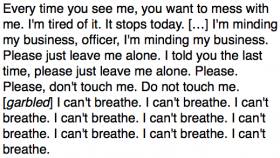
The record shows that the government continually harassed Garner even before this cantbreatheincident. Garner was just minding his own business, interacting peaceably with others in business. Those were Garner’s last words. He was peaceful, but sick of the police thugs roughing him up every time they saw him. He said it was the last time. Garner was not violent, but the police could not have people questioning their authority.

Complicit in the murder of Eric Garner are the petty tyrants of New York and the rest of the nation. They vote into law the ability for the government to kill people over mandatory seatbelt use, water use in toilet flushes, smoking in businesses, buying wholesale milk, and a host of other things that the majority whimsically believes is a good idea. Every regulation and every law is power granted to the government to kill.

The only just laws are areas in which there are justified reasons for which to kill someone. Property rights and the right to life are obvious. Reckless driving or other negligence, maybe. Carbon emissions and expired car registrations, probably not. When people vote for a law, they first need to ask themselves “is this worth killing someone over?”

Government Meme

Posted in Death Penalty, Goverment, State Worship | 1 Comment

when God killed children in vain

Jer 2:30 “In vain [shawv] I have chastened [naw-kaw’] your children; They received no correction. Your sword has devoured your prophets like a destroying lion.

In Jeremiah 2, God is lamenting that Israel has abandoned Him. In this chapter, God details His blessings for Israel and His reproofs of Israel. God cannot understand why Israel is so stubborn, to reject Him in favor of false gods. In Jeremiah 2:30, God declares that He has killed [naw-kaw’] their children. Children might be a general term for Israel, such as “Children of Israel”, but there is a strong theme in Jeremiah of punishing families including children. God uses the death of children as the ultimate punishment against the wicked. After all, what else can break a man besides the death of his children? The word naw-kaw’ can mean “punish”, but it is often used for slaying within Jeremiah and within the Bible. The interesting thing is that the verse says this slaughter or punishment was done “in vain”. The most heartbreaking act imaginable did not stir the hearts of Israel.

This word literally means “without profit”:

Mal 3:14 You have said, ‘It is useless [shawv] to serve God; What profit is it that we have kept His ordinance, And that we have walked as mourners Before the LORD of hosts?

So God is punishing Israel and the punishment is done without the desired results (or any results). God’s punishment did not accomplish what He wanted. It was a wasted act. This does not sit well with those who believe God knows the future in detail. If that is the case, God is killing people for no reason at all. The text is meant by the author to communicate that God expected His punishment to result in repentance. God’s reason for punishment was the possibility of repentance.

Throughout Jeremiah, God details His ongoing plans to punish Israel, including punishing the families and children of the wicked:

Jer 6:11 Therefore I am full of the fury of the LORD. I am weary of holding it in. “I will pour it out on the children outside, And on the assembly of young men together; For even the husband shall be taken with the wife, The aged with him who is full of days.

Jer 9:21 For death has come through our windows, Has entered our palaces, To kill off the children—no longer to be outside! And the young men—no longer on the streets! [God says He will cause this in Jer 9:15]

Jer 11:22 therefore thus says the LORD of hosts: ‘Behold, I will punish them. The young men shall die by the sword, their sons and their daughters shall die by famine;

Jer 15:7 And I will winnow them with a winnowing fan in the gates of the land; I will bereave them of children; I will destroy My people, Since they do not return from their ways.

Jer 16:3 For thus says the LORD concerning the sons and daughters who are born in this place, and concerning their mothers who bore them and their fathers who begot them in this land:
Jer 16:4 “They shall die gruesome deaths; they shall not be lamented nor shall they be buried, but they shall be like refuse on the face of the earth. They shall be consumed by the sword and by famine, and their corpses shall be meat for the birds of heaven and for the beasts of the earth.” [God says He will do this in Jer 16:9]
Jer 18:21 Therefore deliver up their children to the famine, And pour out their blood By the force of the sword; Let their wives become widows And bereaved of their children. Let their men be put to death, Their young men be slain By the sword in battle. [This is Jeremiah asking God to do this]

Jer 29:32 therefore thus says the LORD: Behold, I will punish Shemaiah the Nehelamite and his family: he shall not have anyone to dwell among this people, nor shall he see the good that I will do for My people, says the LORD, because he has taught rebellion against the LORD.

In Jeremiah, the people as a whole have rebelled. The punishment then falls on not only them, but their children. But God will not always operate like this. Jeremiah states that at some point in the future, God will begin only punishing those who deserve to be punished and not their children.

In other words, God will be changing His operating procedures. In Jeremiah 31, God begins describing Israel after they have returned to Him and after God has shown mercy to them. It is at this time God will begin punishing each person for their own sins:

Jer 31:27 “Behold, the days are coming, says the LORD, that I will sow the house of Israel and the house of Judah with the seed of man and the seed of beast.
Jer 31:28 And it shall come to pass, that as I have watched over them to pluck up, to break down, to throw down, to destroy, and to afflict, so I will watch over them to build and to plant, says the LORD.
Jer 31:29 In those days they shall say no more: ‘The fathers have eaten sour grapes, And the children’s teeth are set on edge.’
Jer 31:30 But every one shall die for his own iniquity; every man who eats the sour grapes, his teeth shall be set on edge.

The Hebrew idiom at the time was that ‘The fathers have eaten sour grapes, And the children’s teeth are set on edge.’ Jeremiah explains the reversal of the idiom, which is useful if the idiom is not obvious to modern readers. The illustration is that the father is eating something bad and the children taste it. This idiom meant that when the father sinned, then God punished even the children.

Jeremiah means for this saying to be dissolved in Israel (not right away, but at some future point). At that time, God will reverse that saying. People will begin to die for their own sins, not the sins of their fathers. In Ezekiel’s time, God seems to have embraced this fully in reference to Israel:

Eze 18:2 “What do you mean when you use this proverb concerning the land of Israel, saying: ‘The fathers have eaten sour grapes, And the children’s teeth are set on edge’?
Eze 18:3 “As I live,” says the Lord GOD, “you shall no longer use this proverb in Israel.
Eze 18:4 “Behold, all souls are Mine; The soul of the father As well as the soul of the son is Mine; The soul who sins shall die.

When God revoked this proverb, it was in relation to Israel’s use. Jeremiah had confirmed the general applicability during his own time. Ezekiel does away with it. The proverb still applies to foreign peoples who are generally wicked. The general principle in all of this seems to be that if a nation is exceedingly wicked, God is justified in complete destruction. If the people are passive, then God judges each according to their works.

Posted in Bible, Calvinism, God, Morality, Omniscience, Open Theism, Theology | 5 Comments

zeus never lies

From Prometheus Bound:

So think carefully! This is no idle threat but the utter truth, coming from Zeus’ mouth and he never lies but brings everything to fruition.

In Prometheus Bound, Zeus is said to “never lie”. This is obviously a rule of thumb or only applicable to the context. It means that every time Zeus threatens destruction, he follows through. Zeus is often depicted as a deceiver. Zeus takes the form of Artemis to evade his wife. Zeus pretends to be Satyros in order to have an affair with Antiope. One would be hard pressed to find a Christian who is familiar with Greek theology who also claims that Zeus never lies. Most people familiar with Greek theology would also admit that Zeus can lie even about the subject of this sentence. The sentence has meaning: that Zeus will follow through on his threats.

The point of this passage is illustrate the reading comprehension divide between Christians reading non-Biblical material and Christians reading Biblical material. The Bible makes several claims that God (Yahweh) cannot lie, but instead of Christians understanding these verses with normal reading comprehension skills, the text is morphed into a statement about Negative Attributes. The extreme position taken is that “it is impossible for God to lie”. This position is that not only does God “not lie” but that God “cannot lie”. The less extreme version is that “God never lies ever about anything.”

The Bible has a different story. God can and God has lied. From deceiving King Saul to lying to Ahab, God uses deceit against His enemies.

See also:

On God and the Ability to Lie
Lies by Prophets and other Lies in the Bible

Posted in God, Theology | Leave a comment