understanding psalms 89

Psalms 89 is said to be written by Ethan the Ezrahite. It was probably written in the time of the rebellion of Absalom (David’s son). King David is being defeated by his enemy and the writer calls on God for salvation from this dark time. The psalm’s overall message is one of hopeless abandonment with reminder to God of God’s promises. The point appears to be a concerted petition to God to move God to action.

Psa 89:1 A Maskil of Ethan the Ezrahite. I will sing of the steadfast love of the LORD, forever; with my mouth I will make known your faithfulness to all generations.
Psa 89:2 For I said, “Steadfast love will be built up forever; in the heavens you will establish your faithfulness.”
Psa 89:3 You have said, “I have made a covenant with my chosen one; I have sworn to David my servant:
Psa 89:4 ‘I will establish your offspring forever, and build your throne for all generations.'” Selah.

The psalm writer starts this psalm with praises to both God’s love and God’s faithfulness. The psalm writer states that he will personally spread this message. In other psalms (such as Psalms 6), this line of thought is tied to an implicit “threat” to God: “If I die, then I can no longer preach your name.” This passage serves as a basis for the petition to God, for the psalm writer will eventually call upon God to fulfill God’s faithfulness and love.

Ethan reminds God of God’s promises to David. David was in trouble, and Ethan wants God to act in order to preserve God’s promise. The writer links God’s faithfulness with God’s promise to King David. The unspoken point is that if God wishes to remain faithful then He must honor His promises to King David.

Psa 89:5 Let the heavens praise your wonders, O LORD, your faithfulness in the assembly of the holy ones!
Psa 89:6 For who in the skies can be compared to the LORD? Who among the heavenly beings is like the LORD,
Psa 89:7 a God greatly to be feared in the council of the holy ones, and awesome above all who are around him?
Psa 89:8 O LORD God of hosts, who is mighty as you are, O LORD, with your faithfulness all around you?

The psalm writer next references God as compared to a sort of heavenly council (the text calls this an “assembly” or “council” and they stand “around” God). This could be a reference to God as compared to pagan deities. It could alternatively be God compared to angels. The idea might be similar to that found in Psalms 82: that various angelic rulers assemble in the heavens and God acts as supreme. God is surrounded by lessor and subservient beings, and none of them compare to God.

What is very interesting is that this scene contradicts notions of omnipresence. God sits in the heavens. God sits among other beings. God is surrounded by them as they praise Him. The author of this psalm seems unfamiliar with modern notions of omnipresence. The image of God is imaginable by the reader, with no hint that the writer believes anything else.

The point of this passage is a praise to God. Although other people and nations serve other gods, Yahweh is supreme. Other angelic or divine beings must fear and praise God. God is a “God of hosts” (God of armies) and is “mighty”. No other being in the heavenly realm shares the same level of power. Ethan expounds upon this power:

Psa 89:9 You rule the raging of the sea; when its waves rise, you still them.
Psa 89:10 You crushed Rahab like a carcass; you scattered your enemies with your mighty arm.
Psa 89:11 The heavens are yours; the earth also is yours; the world and all that is in it, you have founded them.
Psa 89:12 The north and the south, you have created them; Tabor and Hermon joyously praise your name.
Psa 89:13 You have a mighty arm; strong is your hand, high your right hand.

This passage serves as further praise towards God. God can defeat His enemies as they spring up. God can stop waves when they spring up. The idea is that God can respond to events in such a way that nothing can overcome God. God’s strong arm is a figurative illustration for strength. This strength imagery is repeated throughout this passage.

The entire heaven and Earth are said to be God’s. The sense in which this is true seems to be in God’s rulership or jurisdiction. The Earth is God’s because God cannot be opposed with serious strength when God purposes to accomplish something. God is said to have created or founded the world, giving more reason to think that His power is unopposed. All the illustrations seem to call out “if God acts, then no one can oppose”.

Consider the writer’s concept of God’s power in relation to concepts of omnipotence (total sovereignty). God is responding to events that He did not cause. The relationship is dynamic. God sees something, and then God acts and counters that thing. God is powerful, and God uses that power in a reactive way. The picture that Ethan paints is not one of God proactively stopping problems that He foresees. The picture is instead one of God responding to events that God does not like.

Psa 89:14 Righteousness and justice are the foundation of your throne; steadfast love and faithfulness go before you.
Psa 89:15 Blessed are the people who know the festal shout, who walk, O LORD, in the light of your face,
Psa 89:16 who exult in your name all the day and in your righteousness are exalted.
Psa 89:17 For you are the glory of their strength; by your favor our horn is exalted.
Psa 89:18 For our shield belongs to the LORD, our king to the Holy One of Israel.

The psalm then focuses again on praise. God is said to be loving and faithful. God is worshiped, presumably, for these attributes. God’s righteousness is highlighted continuously by God’s people. In part the worship is because God has granted His people particular favors. God has made them strong and “their horn is exalted” (an idiom meaning that the recipient is triumphant). The people currently prosper because of God’s continuous work in their lives.

The psalm writer is presenting Yahweh as active and relevant to Israel’s destiny. God is not passive, but bestows present day blessings upon His people. This leads the people to worship Yahweh. God, here, is presented as living and dynamic.

Psa 89:19 Of old you spoke in a vision to your godly one, and said: “I have granted help to one who is mighty; I have exalted one chosen from the people.
Psa 89:20 I have found David, my servant; with my holy oil I have anointed him,

The psalmist references some sort of vision from times past. This is most likely in reference to statements that God gave to Samuel about David. There are several accounts of God seeking out a new King after Saul failed. The “finding” might be in reference to 1 Samuel 13:14:

1Sa 13:14 But now your kingdom shall not continue. The LORD has sought out a man after his own heart, and the LORD has commanded him to be prince over his people, because you have not kept what the LORD commanded you.”

The idea seems to be that God surveyed the people and chose one from the midst. This was King David, who becomes the star of the Old Testament. Psalms 89 is a testament to David’s celebrity. The next passage illustrates the place that David held in Israel’s history:

Psa 89:21 so that my hand shall be established with him; my arm also shall strengthen him.
Psa 89:22 The enemy shall not outwit him; the wicked shall not humble him.
Psa 89:23 I will crush his foes before him and strike down those who hate him.
Psa 89:24 My faithfulness and my steadfast love shall be with him, and in my name shall his horn be exalted.

Yahweh is said to “love” David. Yahweh promises to “keep” him forever. Yahweh promises to fulfill His “covenant” with David. The author is strongly communicating that King David held a special and unique status with Yahweh. These personal links are establishing a basis to contrast against God’s current negative disputation to King David, which is described in the second half of the psalm.

God strengthens David (v21). God fortifies David against David’s enemies (v22). God will destroy those who threaten King David (v23). God promises, personally, to stay true to King David (v24). The idea is that God has a personal and unique connection to King David. This reinforces the entire point of the passage: because of King David’s unique relationship, God should intervene and save David. The writer continues:

Psa 89:25 I will set his hand on the sea and his right hand on the rivers.
Psa 89:26 He shall cry to me, ‘You are my Father, my God, and the Rock of my salvation.’
Psa 89:27 And I will make him the firstborn, the highest of the kings of the earth.
Psa 89:28 My steadfast love I will keep for him forever, and my covenant will stand firm for him.

Verse 25 uses an idiom to explain God’s intent towards King David. God will put King David’s “hand” on the sea and on the rivers, most likely meaning that God will extend King David’s rule to the ocean and to the rivers. “Hand”, throughout the Bible, is figuratively used for “power”. By the time that Psalms 89 was written, King David had already extended his rule to these areas. This could very well be a hindsight observation, as there is nothing explicit before David conquers telling of the extent of his rule.

King David is the said to cry out to God. This does not have to be a direct quote, but just a general statement. King David cries out to God throughout the Psalms. King David has similar statements to this throughout his writings, so this mode of thought is not foreign to King David’s character.

As with the rest of this psalm, King David is given a unique place. David is the firstborn. David is the highest King of the earth. God will keep David forever. God’s unique relationship with King David may explain God’s double standards for King David and the previous king, King Saul. Whereas King David commits several of the same offenses as Saul, David is forgiven whereas Saul is not. The passage even explicitly claims that God will give King David’s descendants more leniency due to their position as an heir of King David:

Psa 89:29 I will establish his offspring forever and his throne as the days of the heavens.
Psa 89:30 If his children forsake my law and do not walk according to my rules,
Psa 89:31 if they violate my statutes and do not keep my commandments,
Psa 89:32 then I will punish their transgression with the rod and their iniquity with stripes,
Psa 89:33 but I will not remove from him my steadfast love or be false to my faithfulness.
Psa 89:34 I will not violate my covenant or alter the word that went forth from my lips.
Psa 89:35 Once for all I have sworn by my holiness; I will not lie to David.

This is styled as God speaking on behalf of David. God says that David’s children will forever be rulers. God specifically states that they will be rulers in spite of their wayward activities. God will punish, but God will not abolish the Davidic rulership. This is all brought back to David. Saving the kingship of David’s sons is linked to God’s steadfast love of David. It is linked to God’s faithfulness to David. God specifically claims that a violation of this lineage would be a “lie to David”. This David-centric psalm will not allow God to revoke His promises to King David under any conditions, no matter how trying. As the psalm later explains, God is on the verge of violating this eternal promise. By styling these verses as being spoken by God, the writer explicitly is claiming that if God fails to save David that God will have lied.

There is a slight difference in the approach of this passage and others relating to the same concept. In other passages, David’s lineage can be cut off. In this passage, they will endure forever. This psalm was most likely written before the book of 1 Kings was written. In 1 Kings, God threatens to cut off David’s lineage due to their personal rebellion:

1Ki 9:6 But if you or your sons at all turn from following Me, and do not keep My commandments and My statutes which I have set before you, but go and serve other gods and worship them,
1Ki 9:7 then I will cut off Israel from the land which I have given them; and this house which I have consecrated for My name I will cast out of My sight. Israel will be a proverb and a byword among all peoples.

The message is not consistent but is modified towards its audience. To King David, his lineage would last forever. To King David’s successors after David is dead and gone, they are warned that their lineage can be cut off. When King David is in need, God is said to have given an eternal promise. When King Solomon may reject God, the promise is able to be revoked. Psalms 89 continues by claiming that King David’s line shall rule as long as the sun shines:

Psa 89:36 His offspring shall endure forever, his throne as long as the sun before me.
Psa 89:37 Like the moon it shall be established forever, a faithful witness in the skies.” Selah.

It is here that the psalm takes an abrupt turn. Before this point, the psalm gives little hint that the psalm writer is under any distress. If the psalm had ended at this point, it would be assumed that this was a psalm of praise, highlighting God mercy and faithfulness. No ulterior motive would be suspected. But the psalm is not one of praise. Instead, the praise is just a facet of an overall objective. That objective is a petition to God to save King David. The author is under the thought that God is destroying King David:

Psa 89:38 But now you have cast off and rejected; you are full of wrath against your anointed.
Psa 89:39 You have renounced the covenant with your servant; you have defiled his crown in the dust.
Psa 89:40 You have breached all his walls; you have laid his strongholds in ruins.
Psa 89:41 All who pass by plunder him; he has become the scorn of his neighbors.
Psa 89:42 You have exalted the right hand of his foes; you have made all his enemies rejoice.
Psa 89:43 You have also turned back the edge of his sword, and you have not made him stand in battle.
Psa 89:44 You have made his splendor to cease and cast his throne to the ground.
Psa 89:45 You have cut short the days of his youth; you have covered him with shame. Selah.

The text attributes all the ills that have befallen King David to Yahweh. God has cast him off. God has renounced the covenant (the same covenant that was earlier described as eternal). The text is as persistent with God’s curses towards King David as the text was persistent with God’s blessings towards King David earlier in the psalm. God has “cast off”, “rejected”, “renounced”, “defiled”, “breached”, “exalted [enemies]”, “turned back”, “cut short”, and “covered”. God is the actor and everything that has happened to King David is at the hand of God. To the author, God is punishing in an extreme way.

Psa 89:46 How long, O LORD? Will you hide yourself forever? How long will your wrath burn like fire?
Psa 89:47 Remember how short my time is! For what vanity you have created all the children of man!
Psa 89:48 What man can live and never see death? Who can deliver his soul from the power of Sheol? Selah.

This is an interesting argument, made complete by a series of interesting thoughts. The writer first makes a dual claim that Yahweh is both hidden and burning in wrath. God is neglecting, but at the same time exacting vengeance. This idea might be that by Yahweh’s withdrawal, He has allowed human actors to take charge. God’s wrath is His lack of protection, and the agents who fill the void are, in turn, agents of God’s wrath.

Alternatively, being hidden could be some sort of metaphor for not being present (not protecting). This certainly could also be the case. It would help explain passages such as Psalms 139:8-10, in which God is said to be present with King David wherever King David may go.

In any case, the text seems genuine, for the author then uses this to move straight into an argument as to why God should change. Ethan challenges God to remember how quickly men die. The argument is that God may not realize that He is wasting the time of those who worship Him and it would be a shame to waste away the life of God’s people in a state of despair. If God just spends large amounts of someone’s life in punishment, then it is almost like that person was created in vain. Why create someone only to perpetually punish them?

The writer points out that all men die (perhaps contrasting a man’s life with God’s life). And then the writer adds: “Who can deliver his soul from the power of Sheol?” This is a rhetorical question with two possible answers based on the context. Either “nobody” can deliver a life from death (illustrating that man’s life is short) or “God” can deliver a life from death (saying that God should save His people because He can).

It is important to note that this is an argument to God. It does not read as if it is a vain emotional outburst. The author is in pain and is in deep despair. The author wants this pain to stop and wants God to act. Ethan goes on to question God’s love:

Psa 89:49 Lord, where is your steadfast love of old, which by your faithfulness you swore to David?
Psa 89:50 Remember, O Lord, how your servants are mocked, and how I bear in my heart the insults of all the many nations,
Psa 89:51 with which your enemies mock, O LORD, with which they mock the footsteps of your anointed.

The writer appeals to God’s love and faithfulness. This is an accusation. God is being derelict in His responsibilities to King David. The entire first part of the psalm sung praises to God for God’s enduring covenant with King David, and now the author claims that there is no visible evidence that God is fulfilling His part in the promise.

Ethan goes on to claim that there are deep insults to God’s servants. The argument, although less pointed, also serves as an accusation: There is a group of people who serve God who are being persecuted. God is standing by and not silencing the mocking. This could be addressing the subject matter of the mocking (the mocking most likely centers around claims that God “does not see” and “does not act”) or by silencing the mockers (by punishing or killing them). The writer is calling on God to remedy the situation. God must act such that those who mock God can no longer do so. God’s people can then live in peace.

The psalm ends with a simple praise:

Psa 89:52 Blessed be the LORD forever! Amen and Amen.

The author’s conception of God runs counter to the Classical picture of God. God is in heaven, looking down on Earth. God sees events and reacts to those events. God can be moved to action and the psalm writer eagerly petitions God to change. This change is a change for the better in the eyes of the psalmist.

God is also seen as dealing intimately with King David (and Israel). All evils that befall King David are the work of God. All blessings that befall King David are the work of God. Nothing seems to be left to happenstance, at least as it relates to King David. This could support a notion of omnipotence, that God is actively controlling all things. The text does present God as supremely powerful (more than all other creatures). But it does not seem that God controlled the sin of Israel. Instead, God is controlling the punishment of that rebellion. In the author’s mind, God is attempting to shape people’s actions through a series of blessings and punishments (which are both tempered by overarching covenants). The author argues that the punishment has been served adequately.

The author criticizes God while at the same time praising God. The praises are applied to God while at the same time the author presents a path for God to take to prove that those specific praises apply to God. The author sees God as reasonable, and he presents a logical argument for God to consider. In all of this, nowhere is the assumption of classical omniscience. The idea that God knows everything in the future is not in this text, but contrary to it. The idea that God simultaneously considers all logical arguments at the same time in the same sense is not present in the author’s mind. Instead, people can present God with ideas and God will consider them as they are presented. The author believes that he can influence Yahweh.

Posted in Bible, Calvinism, Open Theism, Theology | Leave a comment

eyewitness account of aztec sacrifice

From Bernal Diaz del Castillo’s The Memoirs of the Conquistador:

Indeed, hardly a day passed by that these people did not sacrifice from three to four, and even five Indians, tearing the hearts out of their bodies, to present them to the idols and smear the blood on the walls of the temple. The arms and legs of these unfortunate beings were then cut off and devoured, just in the same way we should fetch meat from a butcher’s shop and eat it: indeed I even believe that human flesh is exposed for sale cut up, in their tiangues, or markets.

Posted in History | 1 Comment

movie review – Killing Jesus

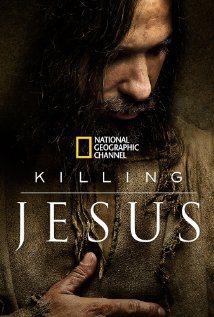
killing jesusKilling Jesus is a TV-movie adaptation of Bill O’Reilly’s work of the same name. The purpose of this movie seems to be to build a more historical portrait of Jesus, rather than the influx of spiritually focused TV films. The setting is very convincing as most actors actually look Middle Eastern and the filming was done in the desert of Morocco. The architectural detail is also convincing, especially during scenes of the Jewish temple in Jerusalem. One has to wonder if they are not re-experiencing life in the Jewish religious tradition of the first century.

Killing Jesus stars Haaz Sleiman (a young Muslim actor famous for his voice work in the Assassin’s Creed video games) as an uncertain and soft spoken Jesus of Nazareth. The cast also is not shy to other famous names: Rufus Sewell, John Rhys-Davies, and Kelsey Grammer. This miniseries does not suffer from the same casting mistakes as Exodus: Gods and Kings.

Jesus, at times, is as surprised about his own miracles as others. Jesus learns who he is from Peter in an awkward scene when he asks his disciples who they think he is. Throughout the miniseries, Jesus’ primary message is one of ethics. There is always a slight hesitance and uncertainty in everything Jesus says. It is as if Jesus says something, not knowing if it is true or not, and then evaluates and accepts the claim. This tends to be slightly comical at times.

The scenes are generally well acted and believable. Jesus is born in Bethlehem. Herod pretends to want to see the new King but instead sends troops to kill young children. The events are brutal and compelling, as Herod’s soldiers rip children away from mothers and cut down resisters.

John the Baptist is beheaded in a similarly shocking and compelling scene. The Biblical account was modified to having Herodias and Salome fabricate the plan in advance due to their mutual hatred of John’s ministry. They plot to seduce Antipas into killing John the Baptist through an exotic dance. Herod Antipas poses the terms before the dance and is not reluctant when the request to behead John is revealed during the dance. In an odd twist, Salome is said to have bad dreams of John’s head from that point forward. I am not sure what that adds to the plot.

One negative about this series is that it both focuses on spiritualizing historical Christianity with bias towards modern theology. For example, in one scene the wife of Pontius Pilate wonders when she will meet the Jewish God. Pontius Pilate responds that the Jews believe God is omnipresent and invisible. Why is this scene included in the miniseries? What is agenda is being pressed?

Rural Jews in Israel could be hardly said to accept omnipresence. There was a strong tradition of God inhabiting the temple sporadically through Israel’s life. Two historical Jews that seem to have accepted omnipresence are Josephus and Philo (Philo in a more philosophical and Platonic sense), but there is little evidence that the Jews in general believed this. In the gospels, Jesus reinforced the claim that the temple is God’s house during the cleansing of the temple:

Mat 21:13 He said to them, “It is written, ‘My house shall be called a house of prayer,’ but you make it a den of robbers.”

Another inaccuracy from the same scene is that any Gentile expected to meet any god, especially in upper class Roman society. Most Greeks, except for laymen, had long ago abandoned the gods of Homer. Mystery Cultism was vogue, as well as Platonism, Stoicism, and Epicureans. It was definitely a scene that could have been cut.

Probably the worst part is the depiction of Jesus’ ministry. Jesus’ ministry is changed from one of a coming Kingdom of God (filled with imagery of angels slaughtering the wicked), to a half-hearted and vague teaching of ethics. The Kingdom of God is spiritualized. The disciples are shown to hold the belief and are left wondering why God’s army of angels does not materialize. There is a scene in which James and John ask to sit on the right and left of Jesus in the Kingdom of God. In the show, Jesus becomes astonished and claims that the question fundamentally misunderstands his ministry. The writer is making it seem as if an Earthly kingdom with thrones was not part of Jesus’ eschatology. The actual exchange suggests the exact opposite. In Jesus’ Kingdom, there would be those on his left and right although he had no right to choose those individuals:

Mar 10:35 And James and John, the sons of Zebedee, came up to him and said to him, “Teacher, we want you to do for us whatever we ask of you.”
Mar 10:36 And he said to them, “What do you want me to do for you?”
Mar 10:37 And they said to him, “Grant us to sit, one at your right hand and one at your left, in your glory.”
Mar 10:38 Jesus said to them, “You do not know what you are asking. Are you able to drink the cup that I drink, or to be baptized with the baptism with which I am baptized?”
Mar 10:39 And they said to him, “We are able.” And Jesus said to them, “The cup that I drink you will drink, and with the baptism with which I am baptized, you will be baptized,
Mar 10:40 but to sit at my right hand or at my left is not mine to grant, but it is for those for whom it has been prepared.”

The Biblical narrative suggests Jesus believes that the Kingdom of God will have a right and left hand to his throne. Throne imagery is consistent in early Kingdom preaching, and does not seem figurative. The Kingdom of God was to be a real place. O’Reilly does not seem to want to add the very historical understanding of the Kingdom of God in his historical narrative of Jesus. And one very strange thing he skips is the resurrection of Jesus, which is depicted as a kind of spiritual resurrection.

Other complaints are minor. Jesus lacks enthusiasm when overturning the temple tables. He picks up the money and starts handing it out. Jesus is baptized fully clothed (which probably is a good historical anachronism), the Sanhedrin is shown as having general power to execute people. There are other nitpicky items, but they are minor.

There are a lot of small details that I enjoyed seeing. Jesus is a toddler when the wise men reach him. The film makes much of the Pharisees and Sadducees attempting to trick Jesus, such as a trap with a coin of Caesar. The film makes clear the various roles of Herod, Pontius Pilate, Antipas, Herodias, Ciaspas, Caiaphas and Annas. It is a good overview of Jesus’ life.

In all, the miniseries is very good. It gives a more realistic portrayal of ancient life than any competing film. The characters are not wooden. It towers about other TV movies, which portray Jesus as if he was psychotically happy or immovably stoic. In Killing Jesus, Jesus is given a personality and acts like a person. The disciples are given individual motivations (as well as Jesus’ enemies). If a hybrid movie were to be made with Killing Jesus spliced with Mel Gibson’s The Passion, it would probably be the best Jesus film in existence.

Posted in Bible, Church Fathers, History, Jesus | Leave a comment

philo on omnipresence

From On Sobriety:

(63) But God is said to dwell in a house, not as in respect of place (for he contains everything and is contained by nothing), but as in a most especial degree exerting his providence and care in favour of that place; for it follows inevitably in the case of every one who is master of a house that he has a particular care for that house.

Posted in God, Omnipresence | Leave a comment

critical thinking applied to psalms 139

6a0133ecf0a174970b01b8d0c588ac970cIn Psalms 139, the text possibly claims that God knows all words before they exit the mouth (I am purposely using an ambiguous sentence):

Psa 139:4 For there is not a word on my tongue, But behold, O LORD, You know it altogether.

Competent individuals have claimed that this passage negates Open Theism. Other competent individuals do not believe as much. From a Facebook comment by Gene on GodisOpen:

Even before there is a word on my tongue, Behold, my daughter knows it all. It’s uncanny. Almost like we have lived together so long she really knows me, who I am, and how I think. She will even say sometimes, “I know what you are thinking.” And she is right.

Gene’s idea is that people might know each other so well they can be said to know what is on the other person’s mind before it is said. In other words, the verse is a generality and based on personal knowledge.

Both views are advocated by rational people. Rational people can disagree. But how is a third party to determine who has the more probable understanding?

The purpose of this article is to use Psalms 139:4 to explore how proper critical thinking deals with any Biblical text (using this specific text as an example). The specific question which will be explored is “in what way and with what mechanism does the author believe God knows words before they are on the tongue”.

Step 1 – Brainstorming

The first action should be brainstorming.

Psa 139:4 For there is not a word on my tongue, But behold, O LORD, You know it altogether.

Possible meanings include:

Future Omniscience – God knows all events, past and future, and thus has all the author’s words in mind. [This seems to be the most popular view.]

General Relationship – Because God knows all people, God generally knows how people think and can determine what they will say though personal relationship. [This seems to be the most common Open Theist view.]

Fatalism – God knows people like we know computers and can look at our input-output to determine what will happen given certain inputs. God knows the future because God knows all input-output code. [This is a view that could be claimed by certain Calvinists and certain theistic fatalists.]

Personal Relationship – God is so familiar and personal with the author (not necessarily everyone else on Earth) and thus knows what David will say. [This is an Open Theist view, not to be confused with General Relationship. In this scenario, God does not necessarily hold the same relationship with all people, but only the speaker.]

Mechanical Knowledge – God can read minds. The mind thinks the thoughts before they are said and thus God can intercept thoughts to know them before they are spoken. [This is a view sometimes claimed by Open Theists.]

Metaphor/Generality – This sentence is fully or partly figurative and idiomatic, meaning a concept similar to knowing words of people before they are spoken. [Any text in the Bible can be a generality or idiom.]

Enigma – This sentence is figurative and idiomatic representing something not familiar to modern readers and unable to be determined. [This is usually the least preferred route, as it is entirely speculative and unable to be proved. This can be adopted when the text is highly inconsistent within the same context.]

To be sure, this list is not exhaustive. With this list, we can determine the variables in the sentence that might have several possible meanings. This can be easily morphed into a formula, where the variables can be mixed and matched. The question can be modeled as such:

God has (absolute / general) knowledge of the words (King David / everyone) is going to say through (future omniscience / personal relationship / mechanical knowledge / fatalism). [Alternatively, the entire sentence is a metaphor and is not actually about God knowing words.]

The trick is to pick the right variables and not every set of variables plays nice together. For example, future omniscience is incompatible with general knowledge, because general knowledge requires imprecise knowledge about the future.

Step 2 – Examine Probabilities

The next step is examining the evidence and assigning how much each evidence supports or does not support the statement in question. The only evidence for Psalms 139:4 is the immediate context and the context of King David’s other writings (maybe culture context as well). The immediate context should be of primary importance as essays and narratives tend to have a unifying theme. While authors can contradict themselves over several writings (stressing different points in different contexts), it is less likely to encounter this in a single narrative.

Every evidence from the context should be examined in light of each possible meaning. If the author means Mechanical Knowledge then would the evidence under examination be consistent with the Psalms 139:4 using the same meaning? If Personal Relationship is true, would the author write this evidence in a different way to complement the idea of Psalms 139:4?

The context is most likely written in a way fortifying and complementary to that correct interpretation. For example, if David’s point is that God can predict based on inputs like a computer, then other verses make mention or be consistent with God examining data input. If David’s point is about God knowing the future, then David should speak as if God not only knows the future, and should not write in a fashion that would be unnatural for that view. If David’s point is about God knowing him personally, and not necessarily anyone else, the text should be focused on David with little hint to general applicability.

So, what is the context?

Psa 139:1 For the Chief Musician. A Psalm of David. O LORD, You have searched me and known me.

King David believes God searches him in some fashion and then knows David. This does not appear written as if God knows the future by virtue of being omniscient. Instead, this points to God gathering knowledge through action. If God did not search, then God would not know. This gives weight to Personal Relationship (notice the “me” references) and possibly Mechanical Knowledge (the searching might be intercepting thoughts). This is evidence against Future Omniscience (God is not assumed to already know), General Relationship (there is no reference to general applicability), Fatalism (God is searching, suggesting no eternal knowledge).

Psa 139:2 You know my sitting down and my rising up; You understand my thought afar off.
Psa 139:3 You comprehend my path and my lying down, And are acquainted with all my ways.

King David believes God understands his thoughts and knows when King David sits down and rises up (figuratively meaning God knows David’s general movements). King David believes God is acquainted with all his ways (all David’s mannerism or, perhaps, walking paths). This is strong evidence towards Personal Relationship as all the phrases revolve around David. As such, this is evidence against General Relationship. Would King David write like this if the ideas were generally applicable? Would King David better be able to communicate his meaning by writing “God, you are acquainted with my ways and the ways of all mankind.” If this Psalm is purposed as a general praise of God, wouldn’t an alternative sentence be more fitting?

This is also evidence against Future Omniscience. Would King David write like this if he believed God knew the entire future in detail? Would King David have better communicated his understanding by writing something such as “You have, from before the creation of the world, known all my ways, everything I would do, and every move I would make.” The text is more focused on God observing and then knowing, not an eternal knowledge.

This could be evidence towards Mechanical Knowledge, but not Fatalism. Fatalism would probably be contrary to the spirit of the text. David is not claiming to be predefined, but instead a rational actor who is observed by God.

Psa 139:5 You have hedged me behind and before, And laid Your hand upon me.
Psa 139:6 Such knowledge is too wonderful for me; It is high, I cannot [attain] it.

King David believes God hedged him, probably meaning God protects him. The hand is symbolic imagery signifying the same protection as the hedge. In verse 6, David says that such knowledge is too wonderful for him. What is he saying here? It appears that the fact that God knows him individually is an amazing thing for King David. If so, this would be further evidence for Personal Relationship and evidence against Future Omniscience or General Relationship. If King David was under the impression that God does this for all people then it would cease to be special. It can be assumed that King David does not believe God “hedges and protects” all people, giving further evidence that this is about a Personal Relationship rather than a general trend.

This also serves as evidence against Mechanical Knowledge and Fatalism. David is not stressing God’s knowledge, but God’s actions to David.

Psa 139:7 Where can I go from Your Spirit? Or where can I flee from Your presence?
Psa 139:8 If I ascend into heaven, You are there; If I make my bed in hell, behold, You are there.
Psa 139:9 If I take the wings of the morning, And dwell in the uttermost parts of the sea,
Psa 139:10 Even there Your hand shall lead me, And Your right hand shall hold me.

These verses can be taken in several senses. The most common one is in the sense that David is claiming God is omnipresent. While this could be a possibility, it is more likely that King David is sticking with the theme of God’s personal protection and personal knowledge. The last verse makes this evident. King David is saying “wherever I do, there you are to be with me”. Notice that God’s protection is not generally applicable, thus King David making a point about God being omnipresent would not make sense.

If this verse was about omnipresence, then what point is King David making? That “King David cannot get away from God because God is omnipresent”? It seems more likely that King David is claiming that God follows and precedes him, by virtue of a personal relationship. If this is the case, this is strong evidence towards a Personal Relationship.

If this passage was about omnipresence, perhaps this gives weight to Mechanical Knowledge or General Relationship. It would not affect Future Omniscience, as it neither is for or against that position.

Psa 139:11 If I say, “Surely the darkness shall fall on me,” Even the night shall be light about me;
Psa 139:12 Indeed, the darkness shall not hide from You, But the night shines as the day; The darkness and the light are both alike to You.

In this passage, King David is saying God follows him into the night. The night is could be figurative for “despair” or “deadly situation”, just as “the grave” could be figurative for the same in verse 8. Because King David is using figurative language, this is evidence that a certain level of Metaphor/Generality is being utilized. It can be assumed that King David is not talking about God shining a flashlight on him.

If this verse is about God protecting David in trying times, this is strong evidence towards the Personal Relationship. This could also be about Mechanical Knowledge or General Relationship; King David might have the idea that God calculates everything instantaneously. This is probably evidence against Future Omniscience, as the idea is about an active observation rather than some sort of innate future knowledge.

Psa 139:13 For You formed my inward parts; You covered me in my mother’s womb.
Psa 139:14 I will praise You, for I am fearfully and wonderfully made; Marvelous are Your works, And that my soul knows very well.
Psa 139:15 My frame was not hidden from You, When I was made in secret, And skillfully wrought in the lowest parts of the earth.
Psa 139:16 Your eyes saw my substance, being yet unformed. And in Your book they all were written, The days fashioned for me, When as yet there were none of them.

This passage is generally used to claim that God knows the future of all people. If that is a valid interpretation, then this is strong evidence for Future Omniscience or Fatalism. It would be evidence against General Relationship or Mechanical Knowledge.

But, as with David’s use of “light” and “dark” and “grave”, these verses might be continuing a chain of figurative statements. “Lowest parts of the Earth” seems figurative for “womb”. If so, this is further evidence that this text has a measure of Metaphor/Generality. If the text overall is a generality, the meaning could be close to “God, when I was still in my mother’s womb, you had a plan for my life.”

Greg Boyd claims that “days” is improperly translated. His claim is that this passage is overall about fetology. God knew King David’s development in the womb. If this is the case, this would be evidence for Personal Knowledge, although Boyd believes in General Relationship in regards to this specific passage. This idea could also be evidence towards Fatalism (if not for the personal nature of the passage).

Psa 139:17 How precious also are Your thoughts to me, O God! How great is the sum of them!
Psa 139:18 If I should count them, they would be more in number than the sand; When I awake, I am still with You.

King David seems to be saying that God’s thoughts about David are unable to be counted. A better translation might be “How precious also are Your thoughts about me”. King David clarifies with the phrase “When I awake, I am still with You.” King David seems to be again highlighting his personal relationship with God, which would be diminished if it was generally applicable. This gives evidence towards Personal Relationship and against General Relationship.

Another idea that is commonly believed is that this is a passage in which King David is praising God’s omniscience. The idea is that God has an uncountable number of thoughts. But it is hard to see how this leads to any omniscience conclusion. Omniscience has to be presupposed to come to that conclusion. This is not to mention that Metaphor/Generality has been commonly used in the text and might be a better way to take this text than notions of this verse being about Omniscience.

Psa 139:19 Oh, that You would slay the wicked, O God! Depart from me, therefore, you bloodthirsty men.
Psa 139:20 For they speak against You wickedly; Your enemies take Your name in vain.
Psa 139:21 Do I not hate them, O LORD, who hate You? And do I not loathe those who rise up against You?
Psa 139:22 I hate them with perfect hatred; I count them my enemies.

This text is again very personal. King David talks about his private enemies. King David references people who speak against him. King David seems to have specific people in mind, and he calls upon God to act and to kill them. This is strong evidence for Personal Relationship.

This speaks very strongly against Fatalism (as King David is petitioning God to act which would thus destroy the fatalistic continuity). This also speaks against Future Omniscience, as King David does not seem to think the future is set and makes no reference to God knowing the outcome of the evil men. If King David did believe the future was set, he might word it differently: “God, I know that your plans for these men will be carried out.” or something similar.

Psa 139:23 Search me, O God, and know my heart; Try me, and know my anxieties;
Psa 139:24 And see if there is any wicked way in me, And lead me in the way everlasting.

The last few verses in Psalms 139 are a challenge by King David for God to test him in order to know his heart. King David is not under the conviction that God knows what King David will do in all circumstances. This is strong evidence against Fatalism and Omniscience. This is strong evidence for Personal Relationship, as King David is asking for God to test him personally. This is not a general call for God to test all people. The figurative use of the word “everlasting” is evidence towards Metaphor/Generality.

Step 4 – Rank Probabilities

The next step is to rank variables by probability.

///Very Probable///

Personal Relationship – God is so familiar and personal with the author (not necessarily everyone else on Earth) and thus knows what David will say.

This seems to be the overall point of the entire psalm. King David is highlighting a personal relationship that is not generally applicable to everyone. As such, when David is talking about God knowing words before King David speaks them, it most likely is because God knows David intimately.

Metaphor/Generality – This sentence is fully or partly figurative and idiomatic, meaning a concept similar to knowing words of people before they are spoken.

King David speaks in a lot of generalities and metaphors. As such, it is highly likely that when King David says “For there is not a word on my tongue” that King David means “God can more often than not know what King David is thinking and feeling”. The sentence is a partial generality.

///Probable///

Mechanical Knowledge – God can read minds. The mind thinks the thoughts before they are said and thus God can intercept thoughts to know them before they are spoken.

This could be what David had in mind as a mechanism for God knowing King David’s thoughts. This would have to be combined with Personal Relationship if that is the case.

///Improbable///

Future Omniscience – God knows all events past and future and thus has all the author’s words in mind.

King David’s overall message is not about cool features about God or about the extent of God’s knowledge. There are several passages that serve as strong evidence that David does not have any similar concept to Future Omniscience in his mind as he writes. The strongest evidence for Future Omniscience has to assume away Metaphor/Generality, which is unwarranted considering the strong metaphors and generalities used throughout the text.

General Relationship – Because God knows all people, God generally knows how people think and can determine what they will say though personal relationship.

This meaning would counter the very personal nature of this Psalm. If God does this for everyone, then why is King David praising it? Instead, King David talks about God’s personal protection of him and their mutual enemies. There is just not a sense of general applicability in this text.

Fatalism – God knows people like we know computers and can look at our input-output to determine what will happen given certain inputs. God knows the future because God knows all input-output code.

This does not fit the highly personal nature of King David’s psalm. If this is what King David had in mind, it would not fit the overall point that King David is trying to make.

Enigma – This sentence is figurative and idiomatic representing something not familiar to modern readers.

The text does not contradict itself or does not contain concepts that do not fit neatly into a general framework.

 Step 5 – Formulate a Conclusion

The most probable understanding is:

God has (absolute / general) knowledge of the words (King David / everyone) is going to say through (future omniscience / personal relationship / mechanical knowledge / fatalism). [Alternatively, the entire sentence is a metaphor and is not actually about God knowing words.]

Posted in Bible, Calvinism, critical thinking, Figures of Speech, God, Omniscience, Open Theism, Theology | 4 Comments

tucker on spontaneous order

Jeffery Tucker summarizes organic and spontaneous order:

The problem is becoming an anarchist is then you have to defend the idea. Then you have to say, well, you know, a society without an institutionalized and legal font of aggression in which stuff just kind of happens in various ways and we kind of find our way toward getting along, making stuff, doing cool things, managing our lives, making mistakes and sometimes finding solutions to problems, and crazy surprising things take place that variously delight and alarm us but mostly point us toward ever better ways of living. Immediately the response is: that will never work!

Posted in Economics | Leave a comment

tucker on the unnoticed new world

Jeffery Tucker from a Facebook post (May 2014):

A new world is dawning. Do you see it? It is all around you. The state control over the 20th century is giving way to a people-controlled world of the 21st century. It is emerging bit by bit, peer to peer, one small technological improvement at a time. It is creating new habits, new ways of thinking, new institutions, new and better ways to engage, create, associate, and empower. It is the great trajectory of our times, the relentless march away from authoritarian control toward freedom. By historical standards, it is happening at light speed, but because we are embedded in the revolution day-by-day, we are too willing to treat it as the daily grind. Actually it is not. All acts of creativity are beautiful, but a globally cooperative embrace of creativity put into action to improve lives — a dramatic break with what has been known and what is expected and what is planned — is an awesome thing to behold.

Posted in Standard of Living | Leave a comment

God interrogating adam as an evidence for open theism

In Genesis 3, there is a scene in which God asks Adam questions. This narrative is largely ignored by those who claim a classical understanding of omniscience. But an examination of the text shows that this text cannot just be discarded.

Gen 3:9 But the LORD God called to the man and said to him, “Where are you?”
Gen 3:10 And he said, “I heard the sound of you in the garden, and I was afraid, because I was naked, and I hid myself.”
Gen 3:11 He said, “Who told you that you were naked? Have you eaten of the tree of which I commanded you not to eat?”
Gen 3:12 The man said, “The woman whom you gave to be with me, she gave me fruit of the tree, and I ate.”
Gen 3:13 Then the LORD God said to the woman, “What is this that you have done?” The woman said, “The serpent deceived me, and I ate.”

This scene occurs directly after Adam eats of a fruit that was prohibited by God. Perhaps the sudden appearance of God signifies that He possibly knew Adam’s actions and was bringing Adam to account, although this rendering is not required from the text.

God asks where Adam is. God could have been attempting to make Adam self-identify, which is a strong possibility. It is a common interrogation technique to ask questions for which the answer is already known. This interpretation only works if God does not know how Adam will respond. If God knew “the future” then what possibly could be the purpose of getting Adam to self-identify? God would already know if Adam would self identify or not, rendering the actions meaningless. The tone of the text does not read as if God is just walking through meaningless motions. Usually, the purpose of interrogating suspects (where the answer is already known) is to see if they speak honestly. It is a form of information gathering. Another item of interest is that God acts upon the answers given; where blame was laid, judgment was given.

No matter the spin on these verses, it is hard to deny that God having exhausting knowledge of the future is beyond the realm of the author’s intent.

Posted in Bible, Calvinism, God, Omniscience, Open Theism, Theology | Leave a comment

context is comprehension

curse-god-and-die

…few, if any, writers write with the precision of a legal document, and the inverted pyramids which have been built upon chance phrases of Clement or Justin are monuments of caution which we shall do well to keep before our eyes.
-Edwin Hatch


Existence is defined by contextual understanding. Everything in life is understood through context. What surrounds an object is almost as important as the object itself in explaining that object. Objects themselves can be explained in countless ways. The same messy room could be the result of years of neglect or a movie director setting up a scene. Likewise, Science Fiction author Arthur C. Clarke once stated: “Any sufficiently advanced technology is indistinguishable from magic.” Data, by itself, can have an infinite number of explanations. When viewing the same evidence, any two people could likely come away with reasonable but divergent interpretations. What tilts the weight of the evidence in one direction rather than the other is always context.

Language, in its basic operation, is largely ambiguous. Each sentence can have multiple meanings. A man says of his wife: “She is the most attractive woman in the world.” He could mean he is physically attracted to her more than he is physically attracted to any other woman. He could mean that other men are highly physically attracted to her. He could mean that (in spite of her degrading appearance) he still ignores more physically attractive women because they are not better than his wife. He might just be joking. The possibilities are endless. Without context, it is a mistake to militantly side with any single interpretation. It would be even a bigger mistake to assume a meaning into “most attractive” (such as physical attraction) and then reinterpret the context to fit that assumption. Context defines words; words do not define context.

In relation to the Bible, what this means is that it is a mistake to build (to use Hatch’s imagery) inverted pyramids on fleeting phrases. Hatch does well to illustrate grand and sweeping systems of thought based on fragile evidence. The meaning of a verse or word cannot just be assumed, especially with equally valid and competing interpretations being available. Everywhere and always the larger narrative takes precedence. As Hatch points out: “few, if any, writers write with the precision of a legal document”. Attributes of God are not to be taken from a scattering of prooftexts and chance phrases, but they are to be understood through the overall point of the writer in their specific social-political historical context.

NT Wright expresses his experience with the inverted pyramids, which so often crop up in the modern Christian landscape:

Sometimes even some of the best systematic theologians have allowed their ideas and their systems to float free, to leave the world of 1st century Judaism. And even if they say they believe in the authority of the Bible. [How that works out in practice] … is that they organize all these concepts and sprinkle bits of the Bible in like you may put sugar on your cornflakes in the morning, make it taste better. But it is not actually generated by the narratives and the energy and the reflection which is actually there in scripture itself.

Prooftexting is how individuals win debates. Prooftexting is how smooth speakers make cute expressions. Prooftexting is not how truth is achieved. When reading the Bible and trying to understand Biblical theology, the only valid question is “what is the author trying to communicate to his intended audience?” The implications of what is said must always take second stage to the overall narrative. Only then can Biblical theology be formed.

This question cuts to the heart of any Biblical debate and stops people from distracting from the text. If the debate is about Exodus 32 and the text shows Moses convincing God not to kill Israel because foreign nations would mock God: What is the author communicating to his reader? What evidence is there that shows that this author believed a different series of events occurred rather than what was described? What should the audience take away from this text? Is there any reason to think the author wanted the audience to believe that these events did not take place as described?

When the debate is narrowed to the text in question, this cuts down on prooftext battles where one prooftext trumps another. It is very open ended to debate what one text might mean to the debater; to debate what that one text meant to the author is much more focused. The more words written by an author, the harder it is to ignore the particular theology of the writer. If the author is incredibly prolific, there is more than ample opportunity to understand their basic understanding of theology.

As a side note: while it is acceptable to show what future authors thought about any one prooftext, it is in equal measure as unacceptable to use an unrelated point by a future author to override the text in question. For example Romans 9 can hardly “trump” Hosea 8, especially considering that Hosea had never heard of any people group called Romans or any individuals named Paul. The earlier text is more likely to have influenced the later. If the author of Romans had been trained in a Jewish context, this would include study of Hosea. It would be more rational to form an understanding of Romans 9 consistent with Hosea 8 rather than to form an understanding of Hosea consistent with Romans. This contextual “conflict” is used as an example.

Posted in critical thinking | Leave a comment

ideological turing test – calvinism

God is the benevolent, self-existent, omnipotent, omniscient, timeless, immutable creator of the universe. God, in Exodus 3, introduces Himself as the “I Am”. This is God saying that He is self-existent. Embedded in these words are the idea that God is and always was Himself, eternally. For in the Godhead, there is no change. Thus, even Jesus is able to claim to be the “I Am” (Joh 8:58). Jesus is making the claim (a claim very scandalous to his listeners) that he is/was/will be eternally existent and co-equal with God in the trinity. This is why his listeners then attempt to stone him.

We see that God is good through His redemptive plan for His elect. The Bible describes God’s elect as “adopted”, “holy”, “blameless”. All of this is “in love”. The elect are said to be objects for God’s glory, conformed to the image of Christ. The Bible is explicit:

Eph 1:3 Blessed be the God and Father of our Lord Jesus Christ, who has blessed us in Christ with every spiritual blessing in the heavenly places,
Eph 1:4 even as he chose us in him before the foundation of the world, that we should be holy and blameless before him. In love
Eph 1:5 he predestined us for adoption as sons through Jesus Christ, according to the purpose of his will,
Eph 1:6 to the praise of his glorious grace, with which he has blessed us in the Beloved.

God chose the elect through His sovereign will. That is the beautiful thing: before we were born, before we lived, before we did right or wrong, God chose us in Him (Rom 9:11). Our names were written in God’s eternal book (Rev 13:8) from time eternal. This is God’s love, that God chose us while we were yet sinners (Rom 5:8).

Our names were written from eternity, just as God is eternal. God is the creator of time and all that exists. God says He is the “Alpha and Omega” (Rev 22:13), simultaneously inhabiting both the beginning and the end, directing the world with His sovereign hand.

God is immutable (Mal 3:6). God’s decrees never change (Isaiah 40:8). They never fade away. We never have to worry that God will be fickle or unpredictable. We can have unwavering trust in God.

Because God is timeless, He sees and knows all that can be known. God’s understanding is infinite (Psalm 147:5). The Psalmist takes comfort in the fact that God will never be surprised, will never be taken off guard, that God’s words will come true. God alone is omniscient (1Jn 3:20).

Lastly, all power belongs to God for God created all things. God is omnipotent. God directs the nations to do His will. God directs individuals to do His will. God directs the plans of the Assyrians to punish Israel (Isa 7:17). God hardens Pharaoh to destroy him (Exo 7:3). For who has resisted the will of God (Rom 9:19)?

This is the Biblical picture of God. God truly is infinite, beyond anything human minds can fathom. God is the benevolent, self-existent, omnipotent, omniscient, timeless, immutable creator of the universe.

On Ideological Turing Tests.

Posted in critical thinking | Leave a comment