understanding the fall of detroit

In 1907 Eugene Richter wrote a book entitled “Pictures of the Socialistic Future”. The rise of communism and socialism did not occur until decades later, which makes the accuracy of Richter’s prophecies more chilling. Ritcher applied basic economics to how people would handle the transition to socialism. Ritcher’s point, although not necessarily explicit in his book, is that human nature does not change. People respond to incentives no matter how the fabians try to order society. Why was Ritcher’s predictions accurate? Was he lucky? Did socialism fail because of seven straight decades of bad weather, as the Communists claimed? After all: “correlation does not equal causation”. Or did a basic understanding of economics inform him of causation even before events occurred?

Econ 101 tells economists many things about how people will respond to an increasingly statist political state (or city). Increasing taxes and regulation will cause what is known as deadweight loss (the absence of which causes compounding potential loses to society). In addition, regulation and taxes create barriers for immerging businesses (as established businesses know how to handle the red tape). Increasing taxes moves capital and income into areas with the highest return (which might be offshore or in another city). Protectionism causes stagnation, as businesses are not incentivized to innovate. High unionism discourages businesses from innovating, controlling costs, and expanding (current US law creates a special status for “unions” where criminal acts are not prosecuted and businesses are coerced by the state into negotiations). Where there are high welfare benefits, there will be free rider problems. The list goes on. In all, basic economic theory states that the more government involvement in the market, the less productive a society would be.

Detroit, designed by President Lyndon Johnson to be the progressive “City on a Hill”, was one of several cities selective to receive HUD funds for development and become a “model city”. Designed to be a model leftist city, its failure is also symbolic of the intellectual bankruptcy of socialism.

Detroit is currently designated as the most liberal city in America. It also ranks close to top in government spending, taxes, deficit, and debt. If Keynesianism was correct, Detroit should be flourishing. But instead it is floundering, like its European counterpart Greece.

One key component of Ritcher’s book was flight of the most productive. He predicted that the most productive members of society would flee in the face of socialism. This occurred in Russia and Germany in the face of socialism (Nazism and Communism). In Detroit there were no machine guns stopping the productive from fleeing. Over the course of 50 years, Detroit has lost over half its population and has long ago forgot that it was once the richest city in America. It is a telling fact that 81% of Detroit is categorized as “black”. There are no whites left to blame racism for the problems plaguing this city. The most productive have fled and left Detroit to “the people” (Detroit also makes an interesting case study of a real life Atlas Shrugged).

Why has Detroit failed long before sister leftist cities such as New York and San Francisco? One key element might be in the fact that San Francisco is in California and Detroit is in Michigan. Sunny beaches tend to draw more crowds than urban ice patches. Just as in real life, people have varying breaking points based on contributing factors. A popular meme shows a scale between how hot a girl is verses how crazy she can be. When a girl is beautiful, boyfriends allow more tolerance in negative features.
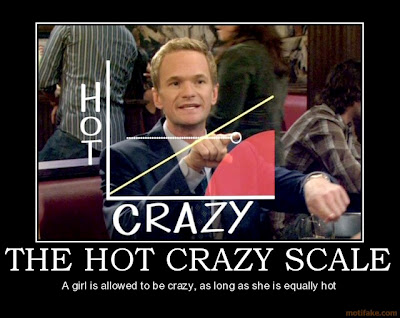
Cities work the same way. New York has society, fashion, and glamor. California has those also also along with beaches. Detroit, on the other hand, has a strong diversity in ways to be murdered. Anyone willing to tolerate Detroit can tolerate San Francisco or New York with more social benefits. Those cities may even act as Veblen Goods, a premium in price for status. (On a side note: California now only has positive population growth due to immigration).

Detroit is a model city. It models the basic principles of economics and the effects of socialism.

Posted in Econ 101, Economics, Goverment, History, Human Nature, Labor, Leftists, Price Controls, State Worship, Taxes | Leave a comment

detroit: the liberal utopia

Detroit has recently declared bankruptcy, a declaration overturned by a judge. It is going broke as its residents flee. Humorously, the city was featured in the Survival TV show Apocalypse Man, about how to scrounge for food and shelter in a post-apocalyptic world. Abandoned buildings and houses were plentiful in this real world post-apocalyptic city. What is especially telling is that this city was once the richest city in the US, until the leftists began their programs:

Imagine a city where all the major economic planks of the statist or “progressive” platform have been enacted:

-A “living wage” ordinance, far above the federal minimum wage, for all public employees and private contractors.
-A school system that spends significantly more per pupil than the national average.
-A powerful school employee union that militantly defends the exceptional pay, benefits and job security it has won for its members.
-Other government employee unions that do the same for their members.
-A tax system that aggressively redistributes income from businesses and the wealthy to the poor and to government bureaucracies.

Would this be a shining city on a hill, exciting the admiration of all?

The article continues:

In 1950, Detroit was the wealthiest city in America on a per capita income basis. Today, the Census Bureau reports that it is the nation’s 2nd poorest major city, just “edging out” Cleveland.

Mises.org adds:

Detroit is bankrupt, and its problems appear to be unsolvable. Its population peaked in 1950 at 1,850,000 only to fall to 706,000 in 2011, surely representative of people voting with their feet.

So the most liberal city in American destroyed itself in about 60 years, but don’t worry. Unable to provide police to stop crime, gardeners to maintain parks, and garbage pickup, the State will spend its time cracking down on unlicensed businesses.

Another funny side note, one of my friends used to work for a demolition company and he was detailing to me accidentally destroying the wrong house in Detroit. There are entire blocks of empty houses in which people live with literally no possessions! This is the utopia that socialism creates.

Posted in Economics, Goverment, Leftists, Standard of Living, State Worship | 5 Comments

how the free market eliminates discrimination

It has long been argued by economists that price pressures create incentives for employers and merchants to end discrimination. This is true because when products are being sold at the natural market rate, limiting your customers necessarily shifts demand to the left (less people competing for the same products). Free markets put incredible pressure to end discrimination, it is the government who passes “Jim Crow” laws and enforces them against the best interest of businesses.

I experienced the power of the market firsthand in college. In college I brought the Center for Bio-Ethical Reform [Warning: Graphic Link] to campus. The project was one in which the student body would be subject to pictures of aborted babies as they passed between classes. Volunteers would stand behind barriers which protected us and our signs from violent students. One girl, who had been a friend of mine, saw me standing next to these signs and started screaming at me between tears. She screamed to me about her drug baby, which she had been having while she was hooked on hardcore drugs. She screamed about how the baby was mutilated by the drugs. She screamed about the horrible life the baby would have had. She screamed about how it was horrible to show these signs to her. I calmly informed her that a human being is a human being and we do not kill people because they are deformed. Needless to say, she stormed off in a cloud of tears.

This was a woman who had previously been my friend. Now she did not so much as look at me on campus. When we would pass, her eyes would be diverted. This would all change the night one of my friends and I decided to find a new place to live.

My friend ran the numbers on our monthly housing costs in the dorms and found that we would save a significant amount of money by living off campus. We arrived at a potential apartment, when to my surprise the very same woman answered the door. A day ago, she hated me with passion and would not acknowledge my existence. But today, when I came to her apartment to potentially take over her lease, all she did was smile and speak pleasantly to me. When she answered the door, her eyes showed a look of surprise, but everything was grins after that. If I hadn’t been a customer, or if the government imposed price controls where people could be picky with whom they do business, these events would not have occurred the same way. It was the market that turned a hostile individual into a considerate acquaintance.

Posted in Abortion, Economics, Human Nature, Price Controls | 3 Comments

dust bowl rabbit bashing

A forgotten episode in American history:

Posted in History, videos | Leave a comment

how God describes himself

There is a cavernous disconnect between how Christians describe God and how God describes himself. Here is one example of a typical Christian answer:

God is a Spirit and is the Creator of all things. He alone is eternal (has always existed) and is the self–existing one (He is completely self–sufficient and independent of anything else for His existence). He is loving, all–knowing, all–powerful, omnipresent (present everywhere at all times), unchanging, holy (without sin), just, long–suffering, gracious, righteous, and merciful. He is the One True God (all other so–called gods are nothing but man–made idols) who reveals Himself in three persons: God the Father, God the Son and God the Holy Spirit.

Churches will talk about “who God is” and then they will list “attributes”. This is very telling, because when God gets a chance to talk about himself, the dialogue is completely different. Instead of describing “attributes”, God defines himself by his actions (by extension: power) and his relationships:

Gen 15:7 Then He said to him, “I am the LORD, who brought you out of Ur of the Chaldeans, to give you this land to inherit it.”

Gen 26:24 And the LORD appeared to him the same night and said, “I am the God of your father Abraham; do not fear, for I am with you. I will bless you and multiply your descendants for My servant Abraham’s sake.”

Gen 28:13 And behold, the LORD stood above it and said: “I am the LORD God of Abraham your father and the God of Isaac; the land on which you lie I will give to you and your descendants.

Gen 46:3 So He said, “I am God, the God of your father; do not fear to go down to Egypt, for I will make of you a great nation there.

Exo 3:6 Moreover He said, “I am the God of your father—the God of Abraham, the God of Isaac, and the God of Jacob.” And Moses hid his face, for he was afraid to look upon God.

Exo 6:7 I will take you as My people, and I will be your God. Then you shall know that I am the LORD your God who brings you out from under the burdens of the Egyptians.

What is different is that God defines himself relationally. When people describe who other people are, they usually do not describe attributes but relations. If someone asked me “who is Caleb?”, I would not respond with “He is a male child approximately age 5 with blonde hair and blue eyes”. I say “he is my son”. Christians treat God as an object, not a person.

The Bible overwhelmingly describes God as relational. The entire text echoes with his actions and relationships. No one pauses to describe God with vague Latin terms. There are, however, those who do stop to define God with these terms. In fact, they focus only exclusively on defining, summarizing, and debating nuances of these terms. Those people are not found in the Bible, but in the works of the neo-Platonists. Here is Plotinus:

Thus The One [god] is in truth beyond all statement: any affirmation is of a thing; but the all-transcending, resting above even the most august divine Mind, possesses alone of all true being, and is not a thing among things; we can give it no name because that would imply predication:

Compare to the Calvinists. From Norman Geisler’s Creating God in the Image of Man:

God is pure actuality with no potentiality in his being whatsoever. That is, God has no possibility of not existing. Whatever has potentiality (potency) needs to be actualized or affected by another. And because God is the ultimate Cause, there is nothing beyond him to actualize any potential he may have.

Where does the Bible talk like this? Where does the Bible define God like the intro quote? Christianity is showing clear signs of infection and the virus is Platonism.

Posted in Calvinism, God, Omnipresence, Open Theism, People, Plotinus, Theology | 2 Comments

the high cost of the ADA

A while back Huffington Post was outraged by Allen West criticizing mandated Handicap Access features for hot tubs. Those leftist went wild with rage. They called him names. Said he hates handicap people. And lambasted the businesses who protested this change. Some went so far as to claim they know what is better for the business than the actual owners of the business. But, as evident by these individuals not starting their own hotels, the business owners know the market better than busybody outsiders.

John Stossel pointed out that the cost of the handicap access to hot tubs alone (not to mention all the other government requirements on hotels) would cost hotels more than $40,000 each:

Despite that, this year, the Department of Justice, constantly issuing new regulations, decided that portable pool lifts are no longer enough…

The lifts are intrusive — we’ll start to see a lot of devices like this around pools. Miller estimates that his renovations, already underway, will cost $40,000.

The money has to come from somewhere, and the only way for hotels to make money is from customers. Every mandated feature is paid for by consumers. So hotels are required to provide lifts, ramps, and every other government mandated feature, and people complain about hotel prices. Naturally they blame “greedy” hotels rather than greedy politicians. Politicians skyrocket the cost of sleeping in a bed! Literally people might spend $100 per night or more at a hotel. For a substantial number of people in America, that is more money than they make in one day! One day’s work in exchange for one night’s sleep! Of course this leads to misery. I have slept in my car at times. I have slept in airports. I have slept outside. When I am paying the cost, sleeping in my car for two nights is not better than the alternative use of that $200 (a Kindle Fire, several nice meals, toys for my children, etc).

Luckily, the market tends to bypass government regulations. Sites like airBNB have emerged allowing private individuals to rent their unused rooms, bypassing most hotel laws. But as usual, the government tries to destroy innovation:

New York recently passed a law making it very difficult for people to offer short-term rentals via popular websites like Airbnb and Roomorama, which connect room-owners and room-renters. I could be fined $25,000 if I rent to tourists through those services.

Posted in Economics, Goverment, Standard of Living | 1 Comment

platonic and calvinist interpretations

Calvinists have a tendency to read into specific texts some ideas that are not present. That is the only way they can still claim the Bible as true while holding onto their platonistic ideas.

Philo of Alexandria was the first Judeo-Christian Platonist from whom we currently have surviving texts. As a committed Platonist, he was as embarrassed by the Old Testament as the Greeks were by Homer. In an attempt to bring the Old Testament into line with Platonism, he reinterpreted everything he could find. As an example:

XI. (28) “But a fountain went up upon the earth, and watered all the face of the earth.” He here calls the mind the fountain of the earth, and the sensations he calls the face of the earth, because there is the most suitable place in the whole body for them, with reference to their appropriate energies, a place that nature which foreknows everything, has assigned to them. And the mind waters the sensations like a fountain, sending appropriate streams over each.

This is Philo’s reading of Genesis 2:6:

Gen 2:6 but a mist went up from the earth and watered the whole face of the ground.

Philo is rejecting the clear meaning of the text in favor of allegory. This, stylistically, was not new. The pagan Greeks had been reinterpreting Homer for centuries before Philo arrived on the scene. From A.A. Long’s Stoic Readings of Homer:

Throughout classical antiquity and well into the Roman Empire, Homer held a position in Mediterranean culture that can only be compared with the position the Bible would later occupy… Like the Bible for the Jews, Homer offered the Greeks the foundation of their cultural identity. Such texts, however, can only remain authoritative over centuries of social and conceptual change if they can be brought up to date, so to speak—I mean they must be capable of being given interpretations that suit the circumstances of different epochs. When read literally, Homer was already out of date—physiologically and ethically unacceptable—for the early Ionian thinkers Xenophanes and Heraclitus. It was probably their criticism that evoked the first so-called allegorical defence of Homer. In the fifth century, Metrodorus of Lampsacus (frs. A3–4 D–K) ‘interpreted the heroes of the Iliad as parts of the universe, and the gods as parts of the human body…

Heraclitus announces his purpose very clearly at the beginning of his book. He intends to rescue Homer from the charge that his account of the gods is blasphemous. He states his primary point in his second sentence: ‘If Homer was no allegorist, he would be completely impious.’

The Greeks saw the gods depicted in Homer as evil, and set out to reinterpret them to more suit their needs. This is a common human condition. When Philo arrived on the scene, it was only natural to reject the God of the Old Testament in favor of the god of Platonism. Philo felt that it was beneath him even to explain problem passages because the platonic truths were self-evident:

“the Lord God, therefore,” says Moses, “seeing that the wickedness of man was multiplied upon the earth, and that every one of them was carefully studying wickedness in his heart all his days; God considered in his mind that he had made man upon the earth, and he thought upon it; and God said, I will destroy man whom I have made from off the face of the earth.” (21) Perhaps some very wicked persons will suspect that the lawgiver is here speaking enigmatically, when he says that the Creator repented of having created man, when he beheld their wickedness; on which account he determined to destroy the whole race. But let those who adopt such opinions as these know, that they are making light of and extenuating the offences of these men of old time, by reason of their own excessive impiety; (22) for what can be a greater act of wickedness than to think that the unchangeable God can be changed? And this, too, while some persons think that even those who are really men do never hesitate in their opinions, for that those, who have studied philosophy in a sincere and pure spirit, have derived as the greatest good arising from their knowledge, the absence of any inclination to change with the changes of affairs, and the disposition, with all immovable firmness and sure stability, to labour at every thing that it becomes them to pursue.

Here Philo is taking the clear passage detailing God’s change of mind and just pretending it does not exist. Modern Calvinists do the same: they reinterpret the scriptures to fit their idea of god instead of letting the text of the Bible describe God. As I have always claimed, the easiest way to defeat a Calvinist is just to read the verse they are quoting. Those verses either have nothing to do with their point or are evidence against their point.

Posted in Bible, Calvinism, Figures of Speech, God, Greek History, History, People, Plato, Theology | 5 Comments

ehrman understands symbolic and moral law

Many non-Christians attempt to counter claims that people are sinners by pointing to the Old Testament. If homosexuality is a sin, they say, then also wearing mixed fibers is as well (Lev 19:19). My response has always been that there is a difference between symbolic law (law meant to distinguish God’s chosen nation) and moral law. They never believe that this is a Biblical concept. So here is atheist Bart Ehrman explaining the difference (perhaps they will believe him). From Peter, Paul and Mary Magdalene:

In my view, the easiest way to solve the problem [of contrary statements about “the law”] is to say that Paul somehow imagines that there are two basic kinds of laws given in the Jewish Scriptures. There are some laws that are meant for Jews to show that they are members of God’s covenantal community, including the laws mentioned above, of circumcision, kosher diet, Sabbath observance, and so on. These are laws that make Jews Jewish. But salvation in Christ, for Paul, is not for Jews only; it is for Jews and Gentiles. Gentiles are not expected to become Jews in order to be right with God. If they had to do anything of the sort, it would show that the death of Jesus itself was not sufficient for a right standing before God. But it is the death of Jesus alone that makes a person right with God. Gentiles who think they have to become Jews (for example, by being circumcised) have completely misunderstood the gospel.

There is, however, the other kind of law found in Scripture. This is the kind of law that applies to all people—for example, not to murder, not to commit adultery, not to bear false witness, and to love your neighbor as yourself. Everyone, Jew and Gentile, needs to keep these laws. Those who are in Christ are able to keep these laws because the Spirit of God empowers them to do so. So it is not by keeping the law that one is right with God. But one who is right with God will keep the law, at least the law that is designed for all people, though not the law designed to show who is Jewish and who is Gentile.

There we have it. Paul talks about two kinds of laws. The task Christians face is to correctly distinguish between the two.

Posted in Bible, Dispensationalism, Ehrman, Morality, People, Theology | Leave a comment

omnipresence and rational irrationality

When I was about 14 years old, I approached my father to ask him a theological question. I had, ever since I was little, been taught God was omnipresent (that he was everywhere at once). But on this particular day I was taking stock of my beliefs and ensuring that my beliefs were not man-made. I went to my father and asked “What evidence is there that God is omnipresent?”

My father didn’t answer me, instead (to his credit), leading me down the stairs and over to the bookshelf, he pulled out a thick volume on systematic theology and flipped the pages open to where the author defended the Latin attributes of God (omnipresence, omnipotence, immutability, etc). I looked over the verses, and the results were shocking to me. The evidence for omnipresence just did not exist. Omnipresence was being forced into verses that had nothing to do with omnipresence. To top it off, the text quoted a traditional hymn and cited the author’s assurance as evidence of its truth. I had been wrong, and worst of all I had trusted human beings over the clear text of the Bible.

Omnipresence is one issue in which I have changed my mind based on the evidence. Most Christians believe God is omnipresent, although the evidence is scant. They might point to a passage such as Psalm 139:

Psa 139:7 Where can I go from Your Spirit? Or where can I flee from Your presence?
Psa 139:8 If I ascend into heaven, You are there; If I make my bed in hell, behold, You are there.

The most straightforward meaning is that God is with David during the bad times and the good. But they will ignore any other alternative than “God is physically present everywhere.” You could point out that it is poetry, that David is not emphasizing God’s location but David’s personal relationship with God (he was God’s anointed). You could point out the Fallacy of Composition. You could point out that “presence” has a host of meanings that do not have to be physical location. You could point out the same word for presence is used when Cain left the “presence” of the Lord and moved to another land (Gen 4:16). In fact, the same passage is filled with idioms from David. He talks about “hands” leading him and “holding” him and being wrought in the “lowest parts of the earth” (a figure of speech for “womb”). The passage is about God being with David, not God metaphysically inhabiting every molecule in the universe. You could point out that Omnipresense is a Platonic concept that is utterly foreign to the Bible.

But mentioning these facts in polite conversation will lead to social ostracization. Why do Christians reject this evidence?

Bryan Caplan points out that human beings are “rationally irrational”:

There is a market for “irrationality”. Some beliefs are very costly. Caplan uses the belief that “one can fly” as an example. He says: “how many kids say that they believe they can fly. How many of those kids proceed to jump off the roof”. A false belief that you can fly is very costly. He says “if you believe you can fly, you will not believe that for very long.”

But some irrationality is practically costless. He then goes on to point out: “there are many beliefs where you can be completely wrong about them for your entire life and nothing will ever happen to you.” He uses an example of someone believing kidney sales are wrong. Although an individual might or might not think kidney sales should be legal, there is zero chance that one individual’s opinion will affect public policy. Someone can change their mind about kidney sales, but their life will not change in the least.

“Rationality”, on the other hand, is sometimes costly. One such cost is that no one likes changing their mind. He cites the book “The God That Failed” (autobiographies by former communists). Changing their belief to a true belief cost them mental anguish, it cost them their friends, it cost them their social standing, and it cost them suicidal thoughts. There was a high personal cost to being rational. Irrationality would have shielded them from intense costs. Some wished they never came to the truth.

Real people respond to incentives. When the cost of rationality is high and the price of irrationality is low, people demand irrationality. Caplan cites “religion” as one such area in which a person “can neglect a world of data and nothing will ever really happen to them”. (as a disclaimer, Caplan is an atheist, and has not responded to my email asking him to read the TheologyOnline debate on the topic.)

The apostle Paul understands rational irrationality. Paul understands the basic economic concept that people respond to incentives. He uses these principles to argue in favor of his sincerity and authority. In Galatians 1:14 he talks about his life before Christianity being “zealous” for the law and then being converted by Jesus. His point is that his life change is evidence of his authority. After all, why would a zealous Jew who was a leader suddenly uproot his life and change? There was something to incentivize him to uproot his life: it was the truth.

Elsewhere, Paul points out because of circumcision he is persecuted (Gal 5:11). His point is that all he would have to do to stop being persecuted is preach circumcision. If he was not sincere about circumcision, a simple change could save him a world of trouble. Elsewhere, Paul lists the terrible things that have happened to him (2Co 11:25). He is pointing out what he is saying is true, because he has no reason to invent lies and every reason to preach something else. Paul’s ministry was not for personal gain or convenience, it cost him dearly. He could have been rationally irrational if he wanted to deny the truth. The great personal cost was evidence of his truth.

One way to confront rational irrationality is to create more cost on irrationality. Economist Bryan Caplan points out that one way to make a costless belief have actual cost is to place a bet:

1. My rational irrationality story. A bet instantly raises the marginal private cost of error, which leads to a sharp increase in rationality. Faced with financial consequences, people suddenly – if temporarily – admit to themselves that they know a lot less than they like to believe – and bet accordingly.

Caplan cites “financial” consequences, but the bet does not have to be financial. While playing a board game with my sister, after a disagreement of the rules I offered a bet on the stake of a “Facebook apology”. Naturally she declined to bet and still insisted she was right even after getting online developer clarification. A bet is a way to test sincerity.

To the horror of Calvinists, God places a bet on Job with Satan (Job 1:9). What was Satan thinking when he bet against God? Calvinists are lost for words.

The biggest problem with betting is that “it is like pulling teeth” to get irrational people to bet on their beliefs.

One personal story: A Christian told me that in Acts 15:2, all the pronouns (them, they, them) referred to “the brethren that were taught” and did not include the “men from Judea”. He doubled down and said it was “obvious”, so I suggested we bet. We could test how obvious it was by asking random people at the mall to tell us who they think the pronouns describe. The Christian looked at me with an odd look on his face; he had no interest in testing how obvious his “obvious” claim was. He was under the strange impression I should just accept his “trust me” argument over the text of the Bible. Putting a cost on his belief froze him in his tacks and he didn’t know how to respond.

When someone holds a costless belief (like Omnipresence) whose alternative is very costly (like denying Omnipresence), they should be taken with a grain of salt. When someone holds a costly belief whose alternative is cheap (like Paul’s costly gospel), they are more likely to be trusted. When someone does not have an example of a costly change of mind (like Paul’s costly conversion), this might indicate intellectual dishonesty. Human beings default to being rationally irrational.

Posted in Bible, Calvinism, critical thinking, Econ 101, Economics, Figures of Speech, God, Omnipotence, Omnipresence, Open Theism, Theology | 4 Comments

platonist concept of time

Here is Plato in Timeaus:

…Now the nature of the ideal being was everlasting, but to bestow this attribute in its fulness [sic] upon a creature was impossible. Wherefore he resolved to have a moving image of eternity, and when he set in order the heaven, he made this image eternal but moving according to number, while eternity itself rests in unity; and this image we call time. For there were no days and nights and months and years before the heaven was created, but when he constructed the heaven he created them also. They are all parts of time, and the past and future are created species of time, which we unconsciously but wrongly transfer to the eternal essence; for we say that he “was,” he “is,” he “will be,” but the truth is that “is” alone is properly attributed to him, and that “was” and “will be” only to be spoken of becoming in time, for they are motions, but that which is immovably the same cannot become older or younger by time, nor ever did or has become, or hereafter will be, older or younger, nor is subject at all to any of those states which affect moving and sensible things and of which generation is the cause. These are the forms of time, which imitates eternity and revolves according to a law of number. Moreover, when we say that what has become is become and what becomes is becoming, and that what will become is about to become and that the non-existent is non-existent-all these are inaccurate modes of expression. But perhaps this whole subject will be more suitably discussed on some other occasion.

Time, he argues, is a thing and is created:

Time, then, and the heaven came into being at the same instant in order that, having been created together, if ever there was to be a dissolution of them, they might be dissolved together. It was framed after the pattern of the eternal nature, that it might resemble this as far as was possible; for the pattern exists from eternity, and the created heaven has been, and is, and will be, in all time. Such was the mind and thought of God in the creation of time.

Posted in Calvinism, People, Plato | 1 Comment