who would Jesus whip

Joh 2:13 Now the Passover of the Jews was at hand, and Jesus went up to Jerusalem.
Joh 2:14 And He found in the temple those who sold oxen and sheep and doves, and the money changers doing business.
Joh 2:15 When He had made a whip of cords, He drove them all out of the temple, with the sheep and the oxen, and poured out the changers’ money and overturned the tables.
Joh 2:16 And He said to those who sold doves, “Take these things away! Do not make My Father’s house a house of merchandise!”

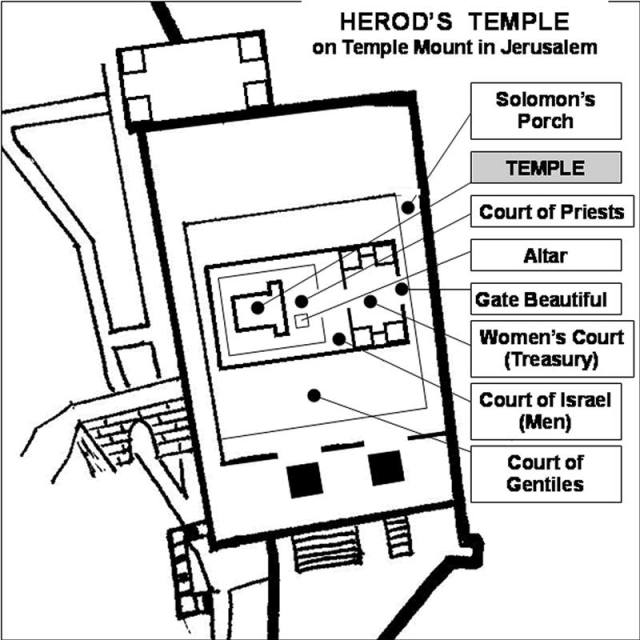
In John, the book describes Jesus’ visit to the temple of Jerusalem. The temple complex consisted of an inner temple building surrounded by outer temple walls. In the outer temple, money changers and animal mongers would set up shop. This would be very convenient for the temple goers who would need both money for the temple tax and also livestock to sacrifice.

The vendors had an ideal location. The temple was precisely where the money and animals were needed. Not everyone had Jewish money (Roman money was seen as sinful and thus needed to be exchanged for Jewish money) and not everyone had livestock to sacrifice (Jerusalem was urban and even commuters would have trouble transporting livestock to the location). The closer to the inner temple, the more profitable the merchants could be. There even might have been some deal between vendors and the priests of the temple to provide kickbacks, as we find so often in surveys of historical merchant practices.

Jesus comes across this scene and instantly becomes enraged. To Jesus, God’s house was holy and people should not be building businesses inside God’s special place. These people were profaning God. Image a hotel was set up inside the Holy of Holies, or a bounce house set up in the temple courtyard. This was sacrilegious.

Jesus bundled a whip together and drove out merchants:

Joh 2:15 When He had made a whip of cords, He drove them all out of the temple, with the sheep and the oxen, and poured out the changers’ money and overturned the tables.

The temple complex was roughly 8 acres. Jesus used the whip to drive out the sellers of animals along with the animals. Jesus then turns his attention towards the money changers. He flips over their tables, possible causing mass confusion as the money might scatter all around a crowded area.

Although Jesus could have caused confusion, his anger must have been unstoppable in order to drive out multiple animal herders and flip multiple tables without being suppressed. Driving vendors (which might have lined perhaps the perimeter of an 8 acre area) is impressive (assuming a total purge). The story would support a lesser purge or even a smaller vendor presence than the land area would suggest. But in any case, one man driving out determined merchants is impressive.

Other theories of the events, attempt to salvage the image of Jesus: perhaps Jesus was angry that the vendors were cheating people. How? If people were paying market prices willingly for animals or even willing exchanging their money, would not the people know their animal was sub-par or the exchange rate fixed? How does one cheat a buyer of an animal? Jesus was not angry about cheating but about business in the temple.

Another theory is that Jesus only whipped the animals. But the text does not seem to fit this. The animals are addressed as an afterthought. Jesus drives out those who sell animals and then also the animals. That is how the text reads. Jesus whipped out the animal mongers.

In short, Jesus would whip those who profaned the temple of God (not to be confused with modern churches). To Jesus, God’s temple was holy. Anyone making a mockery of God’s holy place was vulgarizing God. That activity was not acceptable to Jesus.

End note: because the temple leaders might have been hurt financially, this event could have directly led to the conspiracies to execute Jesus.


Posted in Uncategorized | 1 Comment

extreme preferences – slowmo

Posted in Uncategorized | Leave a comment

taxi avoidance of regulation

Bangkok Taxi

About 14 million people live in Bangkok. The city is a sprawling maze of streets with the traffic density to match. Most residents drive scooters, but plenty of cars are also to be found. Many (a visible estimate of half) of these are taxis. Because of the cheapness of taxis, it is one of the primary modes of transportation for many. The average cost to drive 3 miles for 20 minutes is roughly $3-4 (the distance between Khao San Rd and Hua Lamphong Railway Station). This, of course, is the cost when the taxis use the meter.

In Bangkok, laws have been passed that regulate the rate for all taxis. There are several classes of taxis, which are set at different rates. The rates themselves are based on a minimum fee and a formula that combines time with distance. As soon as that formula exceeds the minimum, then the price starts increasing. All this is prominently listed in English on each taxi. But this price is set low, and taxis know they can charge more (especially for tourists).

Although it is illegal (not to be confused with “immoral”) for taxis to negotiate a firm price, many taxi drivers will wait outside tourist hotels offering fixed priced trips to places around the city. Their goal is to entice someone with money and unfamiliarity with the law into accepting their services. Informed tourists never negotiate with parked taxis when they want cheap prices. It is always best to flag down a driving taxi and start the conversation with “Meter?”.

But meter taxis have their own problems. One of which is that they sometimes take longer routes or spend more time driving to increase the net fare. Tourists have no concept of time and distance in a sprawling metropolis. These taxis could operate in this fashion with no ramification.

Another drawback is that insisting on metered taxis might sometimes cost a driver. If the end destination does not look profitable for the taxi to quickly pick up a second customer, the driver might refuse service. A metered trip might be less than profitable for some trips.

If a tourist cares about time, firm fixed price negotiation is definitely the method to choose. The driver will have every incentive to minimize both distance and time in an effort to maximize his profit. If the tourist knows roughly the cost to drive to a location with a meter (maybe on a return trip), then this negotiation concludes fairly fast and all parties benefit. (A negotiation also helps relieve the fears that the taxi wants to bring you somewhere and mug you. Why not use the meter to lure people instead? With negotiation, they just want your money and not your life.)

Another benefit of firm fixed price is that the risk is placed on the vendor. Getting stuck in a traffic jam for 45 minutes frustrated one driver who had negotiated a firm fixed price with us. While a metered driver might make money off of standing still, the firm fixed price driver bore the complete cost of loss time and gas to transport us.

Another commonly ignored rule in Bangkok is driver registration. Drivers must register with Bangkok for the rights to own and drive a taxi. Each driver is photographed and the photo is displayed for all to see. Several taxis I entered either displayed no picture or a picture of a completely different man. Where a different man was driving, the driver would instantly become shy. The rear view mirror would be tilted such that no one could get a clear view of their face. They might not speak much, and seemed nervous, glancing at you in the mirrors to see if you notice the discrepancy. The nervousness is a good sign, because the driver is not being nefarious in order to hurt you, but is afraid of you hurting him by turning him in. I made sure to always give extra money to “Uncle Bob”, as I call him. Definitely he was borrowing some relative’s ID in order to make a living for himself. He was increasing the number of taxis on the street, and helping reduce the natural market price of taxi services (even the black market prices).

In short, where the government passes regulations there will be incentives to avoid those same regulations. Although these regulations might keep down costs to tourists, it may not be the optimal policy for everyone always. People respond to incentives. Smart people adapt.

Posted in Econ 101, Economics, Incentives Matter | Leave a comment

price fixing in phuket

Recently I had a chance to visit Phuket, a tourist Island in southern Thailand. Hotels during the off season were priced reasonably, $15 dollars a day for a queen bed and hot shower. But, food and clothing prices seem to be priced significantly higher than the prices one would expect in Bangkok (just a day’s trip north).

The reason, it turns out, is that vendors collude to fix prices. This fact occurred to me fairly early in my trip. Each stall sold roughly the exact same merchandise: mostly Billabong hats, shirts, and shorts. Alternatively, vendors sold make-up accessories and Hello Kitty merchandise. I would bring vendors down to their floor pricing, and walk away, looking for additional price decreases. Vendors seemed very hesitant to go lower. If you mentioned a price another stall was offering, they would demand to know which stall offered those prices.

One vendor, from who I bought shorts, was prevailed upon to sell for cheap ($6). He chased me down as I left and pleaded for me not to tell anyone else the price I paid. I promised not to do so. But I also took the time to ask him about the price fixing, to which he readily admitted.

Recently, the military swept through Phuket to clear the merchants from the beach. One of their other stated goals was to clean up mafia corruption. With price fixing, there is bound to be physical violence to enforce pricing schemes.

So how does price fixing not fall apart? One, the shops limit the variety of items sold. It was maddening how little variety the shops stocked. They were little mirror images of each other. It is easier to price fix if shops limit their merchandise. One hundred items are easier to price track than one thousand.

Two, the shops act as spies and informants on other vendors, listening into the bargaining and also asking customers the prices offered by competitors. The shops are literally open air stalls adjacent to each other.

But with all price fixing schemes, each vendor has incentive to cheat. The pants merchant sold me the pants for less, asking silence in return. Food merchants would regularly allow patrons to bring in outside alcohol. In fact, it was encouraged. Because beer prices were fixed, many bars were deserted and any profit was better than none.

One food merchant strove all over to break the price fixing. When I explained to him we were almost done drinking our current 7-11 purchased beer and would come back once we bought new beers, he thought he would lose us as customers and proceeded to walk us to the nearest convenience store. He bought our beers for us (possibly at reduced prices because he was local) and then he walked us to his restaurant. The beers did not appear on our bill. Although food prices were fixed, he was able to give us a de facto discount through costs that did not appear in their official books. Brilliant!

One of the tragic results of price fixing is overemployment. One of the big industries in Phuket is massages, legitimate and illegitimate. Regardless, massage shops consist of an army of young women (intermixed with transsexual men) sitting around and all calling out to strangers in unison. The sound reminds one of a flock of seagulls “massage, massage, massage”. The prices were double that of Bangkok, and I do not believe I saw even one customer in any shop. These people, while they could have been performing work for less pay, were getting zero pay for the same amount of time. Price fixing left all these workers less well-off than they would be otherwise.

For travelers, Phuket is best to be skipped. It is touristy and uninteresting.

Posted in Economics, Price Controls, prices | Leave a comment

jesus son of ananus

In Wars of the Jews, Josephus describes the signs and prophets that foretold of the destruction of the Jerusalem and the temple. Among these is Jesus, son of Ananus. Two significant things about this Jesus:

1. He predicted the destruction of the temple before the actual event.
2. He shares his name with a more famous Jesus who also predicted the destruction of the temple.

Here is the text:

But, what is still more terrible, there was one Jesus, the son of Ananus, a plebeian and a husbandman, who, four years before the war began,

Josephus places this event around 62 AD.

and at a time when the city was in very great peace and prosperity, came to that feast whereon it is our custom for every one to make tabernacles to God in the temple, began on a sudden to cry aloud, “A voice from the east, a voice from the west, a voice from the four winds, a voice against Jerusalem and the holy house, a voice against the bridegrooms and the brides, and a voice against this whole people!”

Josephus may be quoting Jesus, but more likely is summarizing the ministry. Jesus prophecies a “voice” coming against Jerusalem, the temple, and all of Israel. The imagery seems to be one of a surrounding force that encompasses and threatens Israel.

This was his cry, as he went about by day and by night, in all the lanes of the city. However, certain of the most eminent among the populace had great indignation at this dire cry of his, and took up the man, and gave him a great number of severe stripes; yet did not he either say any thing for himself, or any thing peculiar to those that chastised him, but still went on with the same words which he cried before. Hereupon our rulers, supposing, as the case proved to be, that this was a sort of divine fury in the man, brought him to the Roman procurator, where he was whipped till his bones were laid bare; yet he did not make any supplication for himself, nor shed any tears, but turning his voice to the most lamentable tone possible, at every stroke of the whip his answer was, “Woe, woe to Jerusalem!” And when Albinus (for he was then our procurator) asked him, Who he was? and whence he came? and why he uttered such words? he made no manner of reply to what he said, but still did not leave off his melancholy ditty, till Albinus took him to be a madman, and dismissed him.

The people of the city become angry at Jesus’ “dire” cry and showed “indignation”. Jesus’ prophecy was violent in imagery. Jesus was prophesying doom. The people arrest and beat him. They then deliver him to the Roman procurator who also beats him. Jesus does not answer a word. The procurator, Albinus, lets him go as a mad man.

Now, during all the time that passed before the war began, this man did not go near any of the citizens, nor was seen by them while he said so; but he every day uttered these lamentable words, as if it were his premeditated vow, “Woe, woe to Jerusalem!” Nor did he give ill words to any of those that beat him every day, nor good words to those that gave him food; but this was his reply to all men, and indeed no other than a melancholy presage of what was to come. This cry of his was the loudest at the festivals; and he continued this ditty for seven years and five months, without growing hoarse, or being tired therewith, until the very time that he saw his presage in earnest fulfilled in our siege, when it ceased; for as he was going round upon the wall, he cried out with his utmost force, “Woe, woe to the city again, and to the people, and to the holy house!” And just as he added at the last, “Woe, woe to myself also!” there came a stone out of one of the engines, and smote him, and killed him immediately; and as he was uttering the very same presages he gave up the ghost.

Jesus’ ministry lasts for quite some time, 7 years. He then predicts his own death as it occurs. It is hard to say for sure how Josephus knew this detail, but possibly it was a word of mouth legend.

There are some claims that this Jesus, son of Ananus was Jesus of Nazareth. There are plenty of parallels in the ministries. Both Jesus-es prophesy destruction of Israel and the temple. Both Jesus-es are captured in Jeresalem and delivered over the the Romans. Both Jesus-es remain silent when questioned. But that is where the similarities end.

Jesus, son of Ananus, lives and died thirty years after Jesus of Nazareth. Jesus, son of Ananus, did not seem to have a following and had a fairly long ministry. Jesus, son of Ananus, died by Roman catapult during the siege of Jerusalem. By this time, all the gospels had already been written and Christianity was growing. There were two Jesus-es.

Posted in History, Jesus, Jewish History, People | 3 Comments

the wandering jew

In the book “Curious Myths of the Middle Ages“, the author recounts a very interesting myth about a wandering Jew. Supposedly, this Jew had been with Jesus. To those in the 13th century, this would definitely interesting considering the Jew would have to be 1200+ years old.

But this myth survived for good reason: it was the only way they could make sense of the Bible. Jesus stated:

Mat 16:28 Assuredly, I say to you, there are some standing here who shall not taste death till they see the Son of Man coming in His kingdom.”

Jesus was speaking to people of his own time, stating that some of them would not die before the second coming. Obviously, the second coming did not happen within a normal lifetime of Jesus’ statement. Thus the 13th century observer needed a mechanism to save Jesus’ words. In came acceptance of the wandering Jew:

There can, I think, be no doubt in the mind of an unprejudiced person that the words of our Lord do imply that some one or more of those then living should not die till He came again…

So the theory was invented that one Jew did not, in fact, die. This Jew would instead perpetually wander the earth telling others about his time with Jesus:

…at the time of our Lord’s suffering he was thirty years old, and when he attains the age of a hundred years, he always returns to the same age as he was when our Lord suffered. After Christ’s death, when the Catholic faith gained ground, this Cartaphilus was baptized by Ananias (who also baptized the Apostle Paul), and was called Joseph. He dwells in one or other divisions of Armenia, and in divers Eastern countries, passing his time amongst the bishops and other prelates of the Church ; …

when questioned by the bishops and religious ; and then he relates the events of olden times, and speaks of things which occurred at the suffering and resurrection of our Lord, and of the witnesses of the resurrection, namely, of those who rose with Christ, and went into the holy city, and appeared unto men. He also tells of the creed of the Apostles, and of their separation and preaching. And all this he relates without smiling, or levity of conversation, as one who is well practiced

in sorrow and the fear of God, always looking forward with dread to the coming of Jesus Christ, lest at the Last Judgment he should find him in anger whom, when on his way to death, he had provoked to just vengeance.

On one hand, the Christians of the Middle Ages have to be given credit for their Calvinist-like ability to salvage the text with ridiculous propositions. On the other hand, the Christians of the Middle Ages have to be criticized for lacking reading comprehension skills. Jesus was not trying to make a claim to his audience that everyone would be long dead except one who would be immortal. Jesus really meant that the second coming would happen in the lifetime of his listeners.

Posted in Church History, Jesus | 1 Comment

The Loss of Pastoral Credibility in the Age of the Internet

One of the best posts I have read in a while. Isolated theology is weak theology.

Alastair Roberts's avatarAlastair's Adversaria

Rockwell - Freedom of Speech

The Internet has introduced a new level of visibility to areas of our social life, exposing certain uncomfortable realities. Rod Dreher recently wrote a perceptive and troubling piece on the way that the Internet reveals corruption and abuse within the Church and other institutions, provoking a reaction of distrust and a loss of these institutions’ effective authority. While the dramatic collapses of trust in the institutional authority of the Church following the exposure and scrutiny of cases of abuse may receive the most attention, there are other ways—albeit slower and more gradual—in which this trust is being eroded. Perhaps the most significant of these in my experience has been our greater exposure to Church leaders and their thinking.

On Twitter earlier today, I remarked that the Internet exposes the fact that most people were never trained to function effectively in the context of an argument. As forms of discourse such…

View original post 1,297 more words

Posted in Uncategorized | Leave a comment

anachronisms in the Bible

Because the Bible was written to actual human beings by actual human beings to convey actual ideas, sometimes words and concepts are used anachronistically. If someone is talking about the foundation of the city of Rome, they may say that “Romulus and Remus arrived at Rome around 750 BC”. Although the city was not yet founded, it is normal to give listeners an adequate understanding of events by anachronistically using words and concepts. The Bible does this several times:

Gen 21:14 And Abraham rose up early in the morning, and took bread, and a bottle of water, and gave it unto Hagar, putting it on her shoulder, and the child, and sent her away: and she departed, and wandered in the wilderness of Beersheba.

Gen 21:31 Wherefore he called that place Beersheba; because there they sware both of them.
Gen 21:32 Thus they made a covenant at Beersheba: then Abimelech rose up, and Phichol the chief captain of his host, and they returned into the land of the Philistines.

Before Beersheba is even named, Abraham is said to be wandering in the wilderness of Beersheba. Likewise, take an example from the New Testament. In Luke the story develops John the Baptist far into his ministry before it introduces the birth of Christ:

Luk 1:80 And the child [John the Baptist] grew, and waxed strong in spirit, and was in the deserts till the day of his shewing unto Israel.
[very next verse is Luk 2:1]
Luk 2:1 And it came to pass in those days, that there went out a decree from Caesar Augustus, that all the world should be taxed.

Luk 2:5 To be taxed with Mary his espoused wife, being great with child.

Someone wishing to critique the Bible might object that this was introduced anachronistically. But because human beings converse, write, and explain concepts anachronistically, these critiques should be ignored. Anachronistic use of words are normal in conversation, especially if they are used to convey meaningful concepts.

Posted in Bible, Figures of Speech | 2 Comments

vanderbilt defeats a tyrant

In 1855 an American arrived on the shores of Nicaragua. His name was William Walker and he sought to make himself king. His biggest mistake was stealing the property of Cornelius Vanderbilt. Vanderbilt had constructed a railway in Nicaragua to accommodate settlers to California and gold to the eastern US. Vanderbilt’s line to California was about half as expensive for consumers as the competition and was turning amazing profit. When Vanderbilt saw his line and ships were stolen, (in his most awesome act of his life) he disposed the tyrant William Walker. From Men of Wealth (free from Mises.org):

A dashing young American filibuster, William Walker, overthrew the government and seized and revoked the Transit Company’s charter. Such a crisis called forth Vanderbilt’s natural ability as a general. He stopped all his vessels en route to Nicaragua and thus cut William Walker off from communication with America, whence he was getting men and supplies. Walker got himself elected President. Instantly the neighboring Central American “republics” were outraged. Vanderbilt armed and financed Costa Rica, Honduras, Guatemala. They poured hostile troops into Walker’s new empire. He organized a filibuster under two notorious adventurers. He received aid from Buchanan . He drove Walker into a corner until he surrendered to a United States gunboat.

Walker was promptly executed by firing squad.

Posted in History | Leave a comment

plotinus reveals the mystery

The mystery cults were religious orders that existed from before the time of Plato. Mystery cults held their secrets very closely, hence the name. But modern readers can piece together their secrets with the varied sources that are in existence. I have written before on what Plato has revealed about the secrets of the mystery cults, Plotinus reveals the same (700 years later):

7. Therefore we must ascend again towards the Good, the desired of every Soul. Anyone that has seen This, knows what I intend when I say that it is beautiful. Even the desire of it is to be desired as a Good. To attain it is for those that will take the upward path, who will set all their forces towards it, who will divest themselves of all that we have put on in our descent:- so, to those that approach the Holy Celebrations of the Mysteries, there are appointed purifications and the laying aside of the garments worn before, and the entry in nakedness- until, passing, on the upward way, all that is other than the God, each in the solitude of himself shall behold that solitary-dwelling Existence, the Apart, the Unmingled, the Pure, that from Which all things depend, for Which all look and live and act and know, the Source of Life and of Intellection and of Being.

The ascension of the soul to “the One” was the key tenant of most/all mystery cults. In this sense, we understand that Platonism had significant overlap with the mystery cults. By the time of Jesus, the concepts that the Greek gods were literal were mostly abandoned in favor of a being that resembled the Classical picture of God. When Greeks and Romans converted into Christianity, these pagan concepts naturally flowed into the church.

Posted in History, Mystery Cults, Platonism, Plotinus | 3 Comments